
Currently Empty: £0.00
0 Comments
Last Updated: November 4, 2026
Quick Summary
The best firm mattress for back pain is one that keeps your spine in a natural position while you sleep, not simply the firmest bed you can find. Medium-firm is often a sensible starting point, but the right level depends on your sleeping position and body weight. Always lie on a mattress in a showroom before buying, as a bed can feel very different in person than it looks online.
- Medium-firm is often a sensible starting point for people with back pain.
- Back sleepers usually need support that stops the lower back sinking.
- Side sleepers need enough give at the shoulders and hips.
- Test a mattress for at least five to ten minutes in your normal sleeping position.
- Never buy a mattress online blind when your back is involved.
Table of Contents
- Why Firmness Matters for Back Pain
- Why You Must Lie On a Firm Mattress Before Buying
- Best Mattress Firmness for Back Pain
- How to Test a Mattress in Store
- Mattress for Back Pain and Side Sleepers
- Mattress for Back Pain and Mobility Problems
- Booking Your Fitting at Our Finedon Showroom
- Frequently Asked Questions
Why Firmness Matters for Back Pain
Choosing a firm mattress for back pain is less about finding the firmest bed in the shop and more about finding the level of support that keeps your spine in a natural position while you sleep. Many people with back problems assume firmer always means better, but that is not always true.
A mattress that is too soft lets the hips and shoulders sink too far, which can bend the spine out of line overnight. A mattress that is too hard can leave pressure points on the hips and shoulders, making it hard to settle and easy to wake.
We recommend starting with the question “what does my back need?” rather than “how firm should I go?” Your answer depends on your sleeping position, your body weight and any specific problems you have, so the sections below work through each one.
Why You Must Lie On a Firm Mattress Before Buying
Mattress firmness is a feel, and it is very hard to judge from a description or a photo. Two beds listed as “firm” can feel completely different once you lie on them, because construction, springs, foam density and cover all change the sensation.
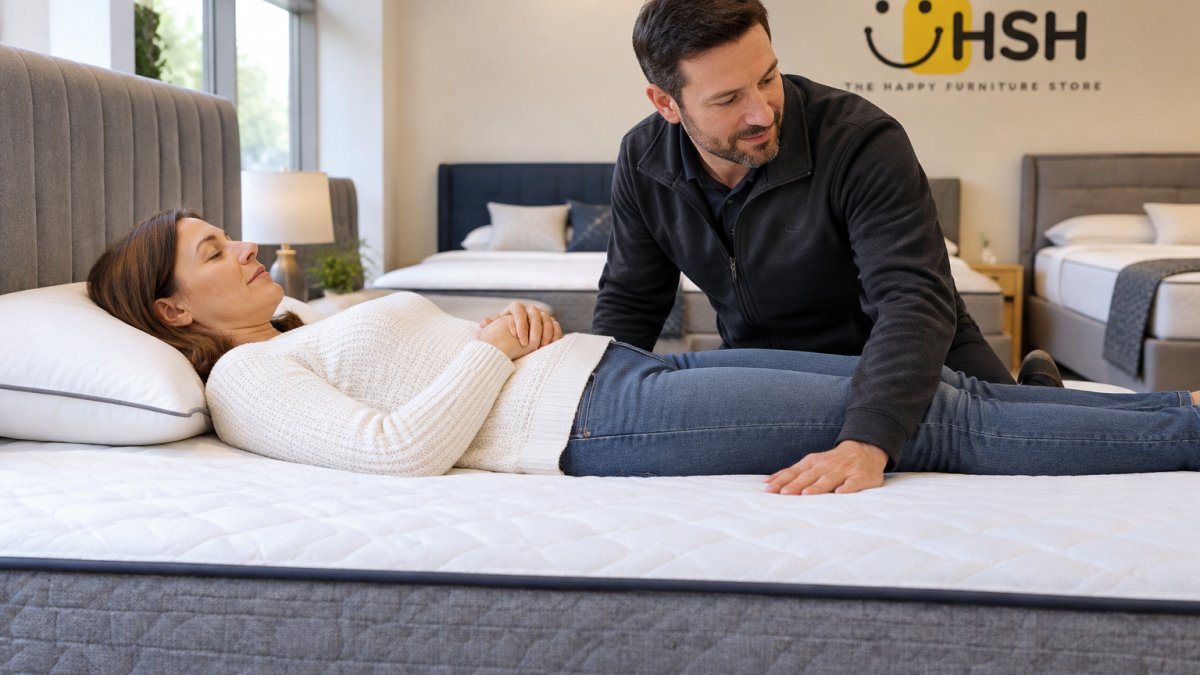
Buying a firm mattress for back pain without trying it first is a common mistake. A mattress that looks right on screen can feel wrong within a few minutes of lying on it, and you may only discover this after the bed has been delivered. It is crucial to try a mattress in person, especially if you have back pain or mobility problems. You must lie on the mattress yourself, in the position you normally sleep in, for several minutes. It is never a good idea to purchase a mattress online blind when your back is involved. Visit a showroom, try a range of firmness levels, and ask staff to help you compare them.
Best Mattress Firmness for Back Pain
Medium-firm is often a sensible starting point for people with back pain, because it tends to balance support and comfort for many sleepers. However, it is a starting point, not a rule. The right firmness depends on how you sleep and how much you weigh, and the two factors interact. A 60 kg side sleeper and a 95 kg side sleeper will not need the same surface, even though both sleep on their side.
Choosing Firmness by Sleeping Position
Back sleepers usually need a level of support that keeps the lower back from sinking. A medium-firm to firm mattress is often suitable, but if the surface is too hard the pelvis can tilt and the lower back can arch.
Side sleepers need enough give at the shoulders and hips to keep the spine straight. Our side sleeper buying guide covers the best mattresses for this sleeping position.
Stomach sleepers generally need a firmer surface, because a soft mattress lets the hips drop and arches the lower back. A medium-firm to firm surface helps keep the spine closer to neutral, but check that your ribs and hips are not taking too much pressure.
Combination sleepers who change position during the night often do best on a medium-firm mattress that copes reasonably well with several positions, rather than a surface tuned to only one.
Choosing Firmness by Body Weight
Body weight affects how much a mattress compresses. Heavier sleepers often need a firmer mattress to get the same level of support, while lighter sleepers may find a firm surface feels too hard and creates pressure at the shoulders and hips. Always check that the manufacturer’s guidance on weight suits you, and test the mattress with your own weight in mind.
A useful way to think about it is compression, not label. A 55 kg side sleeper may sink only a little into a medium-firm mattress, so it feels supportive. A 95 kg side sleeper on the same mattress may sink much further, so the hips drop and the spine curves. The label has not changed, but the support has.
A Firmness Decision Guide by Body Weight and Sleeping Position
Use this as a starting point for what to test, not as a prescription. The only reliable test is to lie on the mattress yourself.
| Body weight (approximate) | Back sleeper | Side sleeper | Stomach sleeper |
|---|---|---|---|
| Lighter (under about 60 kg) | Medium to medium-firm | Medium-soft to medium | Medium-firm |
| Average (about 60-85 kg) | Medium-firm | Medium | Medium-firm to firm |
| Heavier (over about 85 kg) | Medium-firm to firm | Medium to medium-firm | Firm |
These ranges are broad because construction matters as much as firmness. A medium-firm hybrid with zoned support can feel firmer under the hips than a medium-firm all-foam bed. Use the table to choose which mattresses to try first, then judge each one by lying on it in your normal sleeping position for at least five to ten minutes.
Watch out: a mattress described as “firm” by one manufacturer may feel like another’s “medium”, so never choose from a label alone. Bring your body weight and sleeping position to the showroom and test the beds that match your row in the table.
How to Test a Mattress in Store
Testing a mattress properly takes a few minutes and makes a real difference. Follow these steps when you visit a showroom:
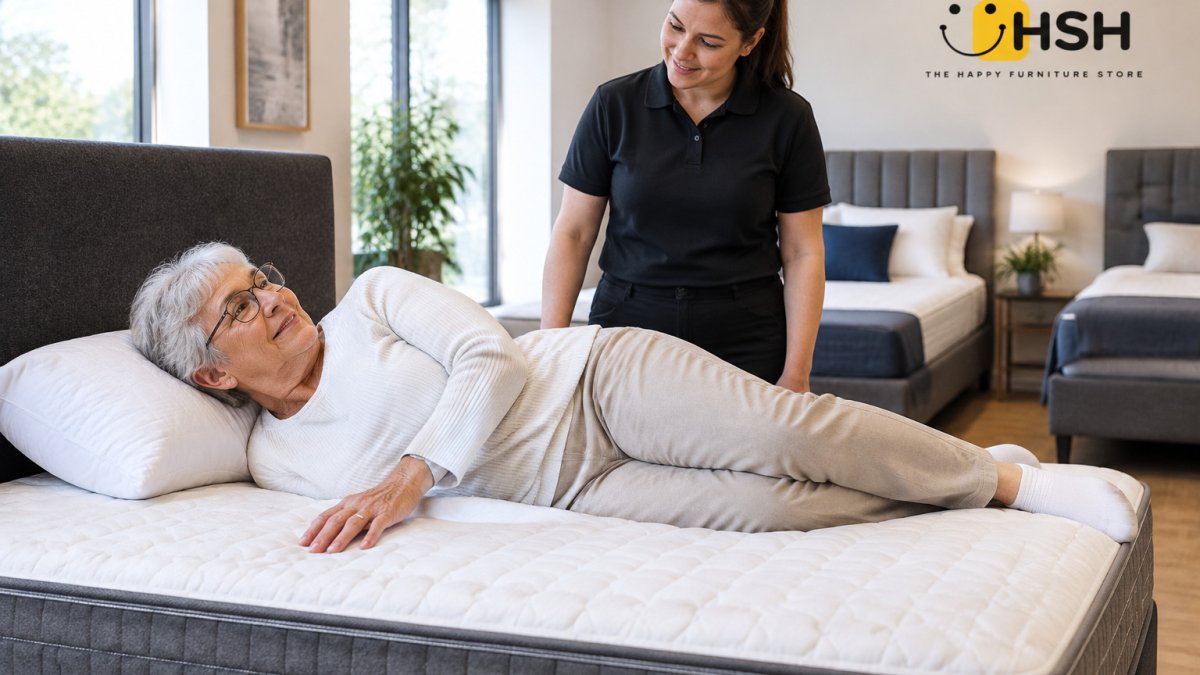
- Lie in your normal sleeping position for at least five to ten minutes. Do not just sit on the edge.
- Check your spine. Ask someone to look at whether your hips and shoulders are level with your spine, or use your hand to feel for a gap under your lower back.
- Press your hand under your lower back. A large gap suggests the mattress is too soft. If you cannot slide your hand under at all, it may be too firm.
- Check pressure points. Notice whether your shoulder or hip feels compressed. Discomfort within a few minutes usually means the surface is too hard for your position.
- Try a second and third mattress of different firmness so you can compare. Test the same position on each.
- Ask about the trial period, returns and warranty before you decide. A trial period is only useful if you understand the conditions, so check them with our team before you buy.
A Practical At-Home Assessment Checklist
Once a mattress is in your home, judge it over several weeks rather than one night. Use this checklist:
- Morning symptoms. Do you wake with stiffness or pain that eases within an hour? That can suggest the mattress is not supporting you well.
- Spinal alignment. Lie on your back and slide a hand under your lower back. A small gap is normal; a large gap or no gap at all suggests the firmness is wrong for you.
- Pressure points. Check for numbness, tingling or redness at the shoulders and hips.
- Sleep position. Notice whether you are waking to change position because of discomfort.
- Break-in time. Most mattresses soften slightly over the first few weeks. Judge the bed after that period, not on the first night.
Trial Periods, Returns and Warranties
A trial period lets you test the mattress at home, but the terms matter. Check how long the trial runs, whether there is a minimum break-in period before you can return it, and what condition the mattress must be in. Ask about collection arrangements and any fees. Our practical guide to buying beds covers what else to check before you buy. A warranty usually covers manufacturing faults rather than a change of mind, so read what is covered.
Watch out: a trial period is not a substitute for trying the mattress first. If you have back pain or mobility problems, lie on the mattress in a showroom before you buy, even if you plan to use the trial period. It is never a good idea to purchase a mattress online blind when your back is involved.
Mattress for Back Pain and Side Sleepers
If you sleep on your side and have back pain, look for a mattress that cushions the shoulders and hips while still supporting the spine. Pressure relief matters here, because side sleeping concentrates weight on a small area. A medium or medium-soft surface is often the right balance for this position, but make sure your hips do not sink too far.
Consider a pillow that keeps your neck in line with your spine, as the mattress alone will not solve every alignment issue.
Mattress for Back Pain and Mobility Problems
If you have mobility problems, getting on and off the bed safely matters as much as comfort. A very low or very soft mattress can be hard to get out of, while a very firm one can be uncomfortable to lie down on. Try getting in and out of each mattress during your test, and consider the height of the bed and whether you may need a firm edge for support when sitting up.
Because mobility and back pain can both change over time, it is worth speaking to your GP or a physiotherapist if your symptoms are persistent or getting worse, rather than relying on a mattress alone.
Booking Your Fitting at Our Finedon Showroom
The best way to find a firm mattress for back pain is to lie on several in person. Our Finedon showroom gives you the chance to test many beds, ask our team questions and compare firmness levels side by side. Visit us to try mattresses before you decide, and our team can help you choose the right firmness for your sleeping position and any back or mobility concerns.
Frequently Asked Questions
Is a firm mattress better for back pain?
Not always. A mattress that is too hard can leave pressure points and stop the spine settling into a natural line. Many people with back pain do best on a medium-firm to firm surface that supports the spine while still cushioning the shoulders and hips. Because individual needs vary, the most reliable way to judge is to lie on the mattress yourself for a good period, ideally in a showroom, before you buy. If back pain is severe or persistent, speak to your GP or a physiotherapist first.
Should I try a mattress in person before buying it?
Yes, especially if you have back pain or mobility problems. Buying a firm mattress online without lying on it means you cannot check whether the support suits your body weight, sleeping position or pressure points. Lie on your usual sleeping position for at least five to ten minutes, and ask a member of staff about any return or trial terms before you commit. Our Finedon showroom lets you test options in person and get advice before you decide.
What mattress is best for back pain and side sleeping?
Side sleepers usually need a surface with enough give at the shoulders and hips to keep the spine straight. A medium-firm mattress with good pressure relief is often a sensible starting point, while very firm surfaces can create pressure points at these joints. Check that your shoulder and hip sink in slightly while your waist stays supported. Test this by lying on your side for several minutes in the showroom, not by pressing the mattress with your hand.
How long does it take to adjust to a new mattress?
Many people need a few weeks to adjust to a new mattress, and it can take longer if the change in firmness is significant. Some aches in the first days are normal as your body adapts. However, if discomfort persists beyond a month, or your back pain gets worse, the mattress may not suit you. Check the trial period and return terms before you buy, so you have time to assess the mattress properly.
Beds, Sofas, Bedroom furniture is a family-run business with over 35 years of experience serving Northamptonshire. Whether you prefer to shop online or visit us in person, we are here to help you find the right bed for a good night’s sleep. Book a mattress fitting at our showroom, or browse our range of firm and medium-firm mattresses to compare options.