
Currently Empty: £0.00

0 Comments
Last Updated: November 22, 2026
Quick Summary
Furnishing a new build works best with a phased plan. Measure every room, door and delivery route first, buy essentials for move-in, then add storage and finishing touches over time.
- Measure rooms as built, since sockets and radiators often differ from the plans.
- Spend roughly half the furnishing budget on essentials for move-in.
- Leave at least 60 cm of walking space around the main pieces where possible.
- Confirm lift size, stair width and building rules before booking delivery.
- Independent local stores can hold orders until a definite moving date.
Table of Contents
- Why Furnishing a New Build Needs a Different Plan
- Setting a Phased Furnishing Budget
- Measuring Rooms for Furniture Before You Order
- Planning Furniture Delivery for a New Home
- How to Make a New Build Feel Cosy and Personal
- Room-by-Room New Build Furnishing Checklist
- Booking Your Furniture Consultation Before Handover
- Frequently Asked Questions
Moving into a new build is exciting, but furnishing one can feel overwhelming. Fresh plaster, new flooring and a clean slate mean every choice shows. Good planning for furnishing a new build saves money, time and a lot of stress. This guide walks you through a plan for furnishing your new home step by step.
A new home needs a different approach from an older one. Many new builds have open-plan living areas, fitted kitchens and fixed storage, so the space is set before your furniture arrives. Buyers often find that the room sizes and door positions are not what the plans suggested. Measuring first and planning the layout early keeps you from buying a sofa that blocks a doorway. You can check the measurements for a sofa step by step before you order.
Why Furnishing a New Build Needs a Different Plan
A new build is ready to live in, but it often has no personality yet. Furnishing it means making many decisions in a short window, usually before moving day. You may also have a fixed handover date, a moving van booked and limited space to store boxes.
Here is what makes new builds different:
- Fixed layouts: Walls, radiators and sockets are already in place, so furniture must fit around them.
- Tight timelines: Deliveries need to arrive once the home is ready, not before.
- Clean surfaces: Freshly decorated walls and floors show scuffs, so protective choices matter.
- Limited storage: Many new homes have fewer cupboards, so you may need freestanding pieces.
Plan the whole home first, then buy in stages. This avoids costly mistakes and gives you room to adjust your style.
Setting a Phased Furnishing Budget
Furnishing a whole house at once can strain your finances. A phased budget spreads the cost over several months and keeps the essentials first. Many households find it easier to split spending into three stages, with a clear rule for what belongs in each.
Stage one: essentials for move-in
- Beds and bedding for every bedroom
- A dining table and chairs or a simple seating area
- A sofa or two armchairs for the main living room
- Curtains or blinds for privacy
Stage two: everyday comfort
- Storage units, wardrobes and bedside tables
- Rugs, lamps and extra lighting
- Coffee tables and side tables
Stage three: finishing touches
- Wall art, mirrors and plants
- Cushions, throws and decorative accessories
- Upgrades to pieces you bought in stage one
A common pattern is to allocate roughly half of the total furnishing budget to stage one, a third to stage two and the remainder to stage three. That split keeps the home liveable from the first night while leaving room for the pieces that make it feel finished. If your budget is tight, protect stage one and delay stage two storage until you have lived in the space and know what you actually need.
Pricing depends on the size of the piece, the materials and the delivery arrangements, so it is best to check current prices and a quote directly on our website before you commit to a figure. Our guide to buying bedroom furniture locally explains how to fit those purchases into a phased plan. Setting a fixed monthly amount for furniture keeps the plan on track.
A phased plan also helps when a handover date moves. Independent local stores often hold orders until you have a confirmed moving date, so you can commit to stage one without risking a delivery to a home that is not ready.
Measuring Rooms for Furniture Before You Order
Measuring is the most important step, and the one people most often skip. Take measurements of every room, every doorway and every staircase or corridor that a large item must pass through. A simple printable checklist keeps the numbers in one place when you are comparing product pages.
Use this checklist for each room:
- Room length and width at floor level, noting alcoves and bay windows
- Room height, including any sloped ceilings
- Door widths and heights, plus the swing of hinges and handles
- Stair width, landing depth and any tight corners on the delivery route
- Lift dimensions and weight limits if the property has one
- Radiator positions and clearance in front of them
- Socket and light switch positions, so furniture does not block them
- Window sill heights and curtain or blind drop
- Fitted units, meters and any fixed storage
- Clearance needed to open doors, drawers and wardrobe doors
Follow these steps:
- Measure each room’s length and width at floor level, noting any alcoves or bay windows.
- Measure the height of the room, including any sloped ceilings.
- Note door widths and heights, and check that hinges and handles will not block a piece.
- Mark fixed features: radiators, sockets, light switches, windows and fitted units.
- Measure the route from the delivery entrance to the room, including stairs and corners.
- Compare against the furniture dimensions listed on each product page before buying.
A common mistake is forgetting the clearance needed to open doors and drawers. Leave at least 60 cm of walking space around the main pieces where you can, and allow around 90 cm in front of a wardrobe or chest of drawers so the doors or drawers open fully.
Watch out: new builds often have sockets and radiators in positions that differ from the plans, so measure the room as built rather than relying on the brochure. If a piece will not fit through a doorway or up a stair, no amount of rearranging will solve it, so check the delivery route before you order.
Planning Furniture Delivery for a New Home
Delivery planning can make or break a new build move. Many new developments have restricted access, lift limits and communal entrances that affect how large items arrive.
Before you book delivery, confirm these details:
- Delivery date: Make sure the home is ready, with heating on and no building work nearby.
- Access: Check whether there is a lift, and whether the lift fits the item.
- Stair access: Check the width of stairs and landings for beds and sofas.
- Building rules: Some developments limit delivery times or require notice.
- Storage: If the home is not ready, ask whether the store can hold your order until the handover date.
Independent local stores usually have storage to keep your order on hold until a definite moving date. This reduces the stress for buyers, especially when a handover date moves back. Larger franchise or chain stores will not offer the same personal service.
The article’s delivery checks come down to a few key points, summarised here so you can confirm each one before booking.
| Check | What to confirm | Why it matters |
|---|---|---|
| Delivery date | Home is ready, heating on, no nearby building work | Avoids deliveries to an unready home |
| Access | Whether there is a lift and whether it fits the item | Large items may not reach the room |
| Stair access | Width of stairs and landings for beds and sofas | Tight routes can block delivery |
| Building rules | Limits on delivery times or required notice | Some developments restrict access |
| Storage | Whether the store can hold your order until handover | Protects against a shifting move-in date |
How to Make a New Build Feel Cosy and Personal
New builds can feel bare and cold. Warmth comes from layers: texture, light and things you love. Small changes make a big difference.
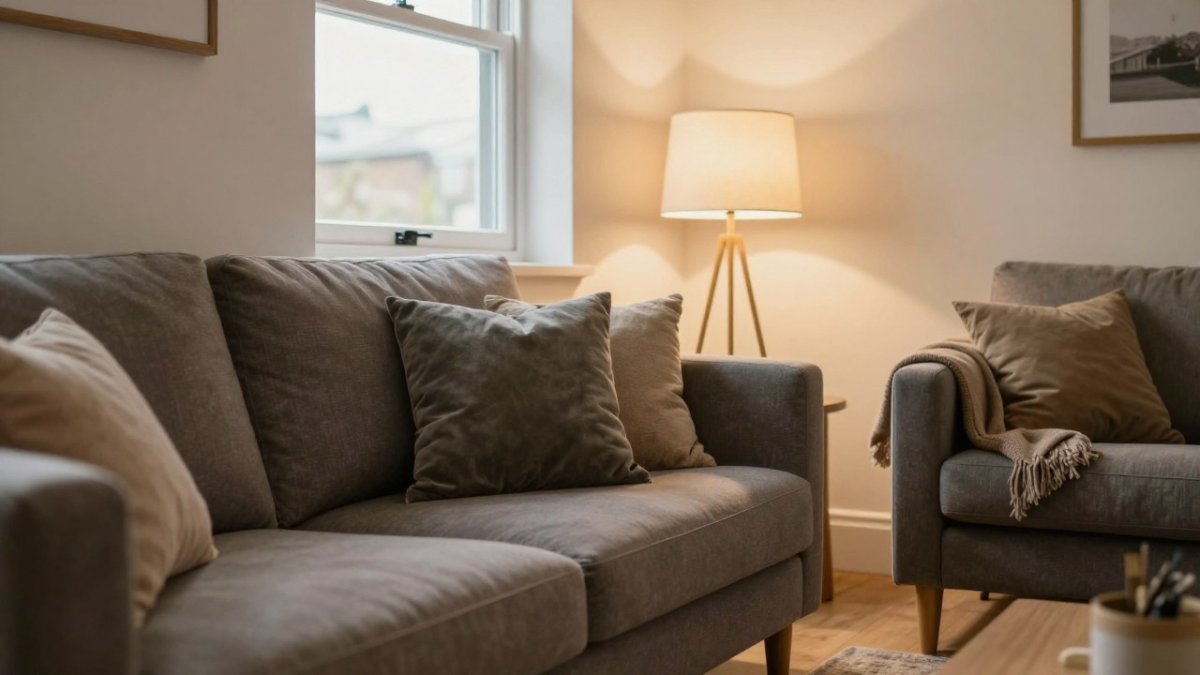
Start with lighting. Use a mix of ceiling lights, lamps and wall lights so the room feels warm in the evening. Add a throw over the sofa, a rug under the coffee table and cushions in two or three colours that match your style.
Good ways to add personality:
- Choose a focal point, such as a feature wall, a statement armchair or a large mirror.
- Mix old and new, pairing a modern sofa with a vintage side table or a family heirloom.
- Add plants to bring life into the room.
- Hang art or photos at eye level to make the walls feel lived in.
Many people find that a cosy room comes from a few well-chosen pieces, not from buying everything at once. Take your time and let the space grow with you.
Room-by-Room New Build Furnishing Checklist
Use this checklist to track what each room needs. Tick items off as you buy or measure them.
Living room
- Sofa sized to the room, with at least 60 cm of walkway
- Coffee table at a comfortable distance from the sofa
- Rug that fits under the front legs of the sofa
- Lamps and lighting for evening use
- Curtains or blinds with the correct drop and width
- Storage unit or TV stand matched to the wall space
Bedroom
- Bed frame measured against the room and door route
- Mattress chosen for comfort and support
- Bedside tables on each side where possible
- Wardrobe or chest of drawers placed clear of the door swing
- Bedding and throws for warmth
Dining area
- Table and chairs that allow easy movement around them
- Pendant or ceiling light placed above the table
- Sideboard or storage for crockery and linens
Kitchen and utility
- Appliances checked against fixed units and sockets
- Bins, stools and small storage in place
- Laundry storage planned for the utility space
Booking Your Furniture Consultation Before Handover
Measuring carefully before handover helps you avoid costly errors.
To make the most of a consultation, bring:
- Your room measurements and a rough sketch of the layout
- Photos of the rooms, taken in daylight
- A list of your must-have pieces and your phased budget
- Notes on household needs, such as storage, children or pets
Visit our website to browse beds, sofas and bedroom furniture. Booking early gives you time to adjust your plan if the handover date changes.
Furnishing a new build does not have to be stressful. With a phased budget, careful measurements and a clear delivery plan, you can turn an empty home into a comfortable place to live. Take it one room at a time, and enjoy making the space your own.
Frequently Asked Questions
What furniture should you buy first for a new build?
Start with the pieces you use every day: a bed, a sofa and a dining or work table. Buy the mattress and bed frame first if you are moving in soon, since a good night’s sleep matters most in the early weeks. Leave decorative items and occasional furniture until you have lived in the house for a few weeks and can see how the rooms get used. Sofas and beds from a local independent retailer can often be held in storage until your moving date is confirmed, which helps if completion dates shift.
How do you measure rooms before buying furniture?
Measure the length and width of each room at floor level, then note the height of ceilings, the width and height of doorways and any stairs or narrow halls the furniture must pass through. Mark out the footprint of a sofa or bed on the floor with masking tape to check how it sits. Record window positions, radiators and plug sockets, as these affect where furniture can go. Bring the measurements when you visit a showroom so the staff can check fit against the actual pieces.
How can you plan furniture deliveries when your moving date might change?
Ask the retailer whether they can hold your order in storage until a confirmed date, and check their delivery windows and whether they offer rearranged slots. Confirm the moving date with your developer or solicitor before booking, and keep a little flexibility in your plans. Choosing a retailer that offers personal support makes it easier to change arrangements without starting again.
How do you make a new build feel cosy and personal?
New builds often have neutral walls and clean, uniform finishes, so warmth comes from texture and light. Add rugs, curtains or blinds, cushions and throws in fabrics you like, and use several lamps rather than one overhead light. Hang a few personal pieces, such as artwork or photographs, and let the room develop over time rather than filling it all at once.