
Currently Empty: £0.00

0 Comments
Quick Summary
Expensive furniture is usually worth the cost for pieces you use daily, such as mattresses, beds and sofas, where better frames, springs and foam pay off. Budget pieces are fine for occasional or temporary use. Judge value by cost per year of use, not the price tag alone.
- Higher prices usually reflect differences in the frame, springs, foam and finish rather than appearance.
- Press into seat cushions and check how quickly they recover to gauge upholstery quality.
- Divide total price plus running costs by the years you expect to keep the piece.
- Spend more on mattresses, beds, sofas and armchairs, since they get the most daily use.
- Budget pieces suit occasional use, guest rooms, hallways and rentals you will leave soon.
Table of Contents
- Why Expensive Furniture Costs More Than Budget Pieces
- Cheap vs Expensive Furniture: What the Price Difference Actually Pays For
- How to Tell If Furniture Is Good Quality Before You Buy
- Does Expensive Furniture Last Longer? Lifespan and Cost Per Year
- Comfort, Support and Everyday Use: Where Price Matters Most
- Best Furniture to Invest in, and Where Budget Pieces Are Fine
- Choosing Your Next Piece: Booking a Consultation or Visiting the Finedon Showroom
- Frequently Asked Questions
Why Expensive Furniture Costs More Than Budget Pieces
Last Updated: November 8, 2026
Is expensive furniture worth the cost? For most homeowners the honest answer is yes, but only for certain pieces and only when you know what you are paying for. At Beds, Sofas, Bedroom furniture, we have been serving Northamptonshire families for over 35 years, and the price tag alone rarely tells the whole story.
Higher prices usually reflect real differences in how a piece is made.
Materials and making are only part of it.
The rest of this guide breaks the question down into practical checks: what the price difference pays for, how to judge build quality before you buy, how long good furniture really lasts, and where spending more genuinely matters.
Cheap vs Expensive Furniture: What the Price Difference Actually Pays For
The difference between cheap and expensive furniture is usually found in the frame, the springs, the foam and the finish, rather than the look.
Inside upholstered pieces, the gap is just as wide.
A common mistake is judging furniture by how it looks on the shop floor. Surfaces that appear identical can hide very different construction underneath, so ask what the frame is made from and how the joints are fixed before you compare prices.
The gap between cheap and expensive furniture often sits in parts you cannot see at a glance. Learn how to assess solid wood furniture quality at home before you buy.
| Area | Where the price gap shows | What to check |
|---|---|---|
| Frame | Materials and joints | Ask what the frame is made from |
| Springs | Internal construction | Check how the piece is built underneath |
| Foam | Core quality | Compare the cushioning, not just the look |
| Finish | Surface treatment | Look beyond the surface on the shop floor |
How to Tell If Furniture Is Good Quality Before You Buy
You can check a lot of build quality at home or in a showroom with a few simple tests. Start with the frame.
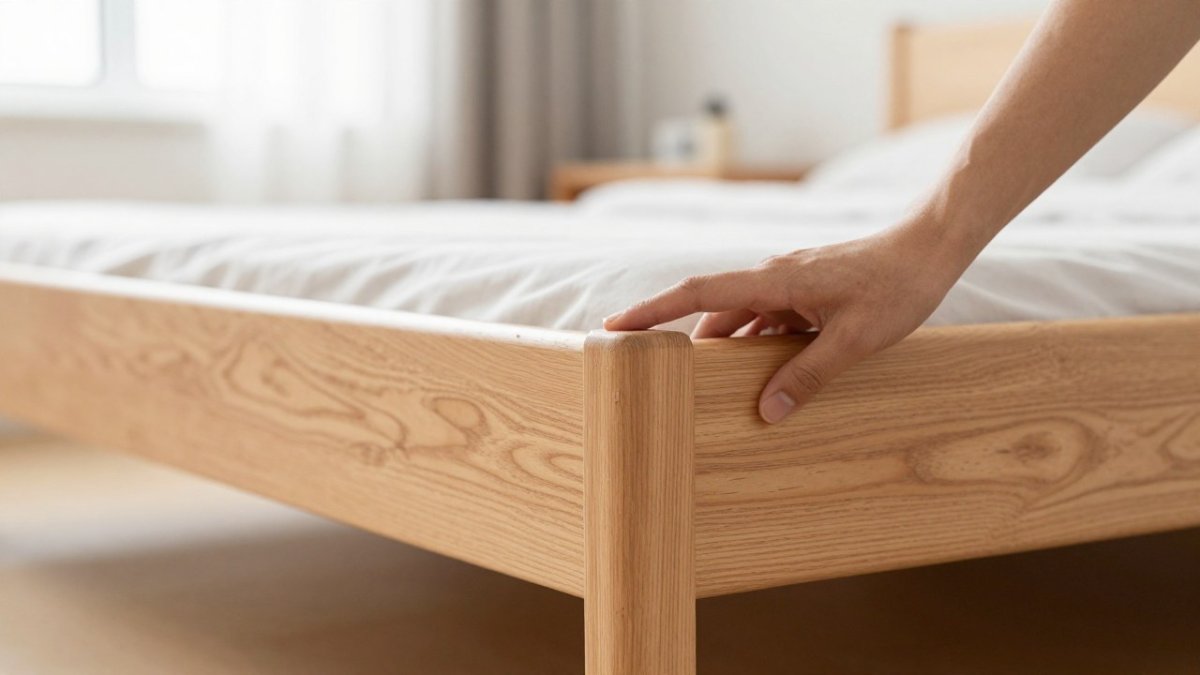
Next, look at how the piece is finished. Even edges, consistent grain matching and smooth, well-sealed surfaces usually signal careful workmanship.
For upholstery, press into the seat cushions and feel how quickly they recover. Check the fabric seams and the way the frame sits on the floor as well, since a wobbly or uneven base is an early warning sign.
Watch out: do not rely on a glossy finish alone. Surface treatments can disguise weak joints and low-grade filling, so look underneath the upholstery and at the back of drawers wherever you can.
Does Expensive Furniture Last Longer? Lifespan and Cost Per Year
Good furniture generally lasts longer, but the real measure is cost per year of use, and that figure only becomes useful when you put actual numbers against it. See which sofa brands are known for longevity when comparing options.
Those figures only hold if you build in the costs that sit outside the purchase price, such as delivery, assembly, stain protection, replacement cushions and any repairs. Divide the total of price plus expected running costs by the years you realistically expect to keep the piece, and compare like with like.
Lifespan depends heavily on use. Heavy daily use, children, pets and direct sunlight all shorten the life of upholstery and finishes, so it helps to pick materials that suit your household.
Comfort, Support and Everyday Use: Where Price Matters Most
Support needs vary from person to person, so the right firmness depends on your body and sleeping position. Try a mattress in the store where you can, and ask for advice if you have an existing back problem. Our team at Beds, Sofas, Bedroom furniture can talk you through the options, including our range of orthopaedic mattresses for people who need firmer, more supportive sleep.
For everyday seating, test how the seat depth and cushion firmness suit your height and the way you sit. A sofa that looks generous on paper can feel uncomfortable after twenty minutes if the seat is too deep or too soft for you.
Best Furniture to Invest in, and Where Budget Pieces Are Fine
Rather than treating ‘expensive’ as a single decision, it helps to rank each item by how often you use it, how hard it works and how much support it needs to provide.
Spend more where support and daily contact matter. Mattresses and beds come first, because you spend roughly a third of your life on them and poor support affects how you feel every day. Sofas and armchairs come next, since they take the most concentrated wear in the home. Dining chairs and the family dining table also justify a higher spend, because they are used daily and are difficult to replace piecemeal once a set is discontinued.
Spend moderately where structure matters but use is lighter. Bedroom storage, chests of drawers and sideboards benefit from solid frames and decent runners, but you can often find good value in the mid range without paying premium prices. Look for dovetailed or well-jointed drawers, metal runners rather than plastic, and a solid top or a thick veneer over a stable core.
Budget pieces are fine where use is occasional or the item is temporary. Occasional side tables, a spare chair for a guest room, hallway benches, children’s bedroom furniture that will be outgrown, and anything for a rental you expect to leave within a couple of years are all sensible places to save. There is no need to overspend on pieces you do not use heavily or expect to keep for long.
Household and lifestyle factors change the answer. Renters and frequent movers should weight portability, flat-pack assembly and resale value more heavily, because a heavy solid piece may cost more to move than it saves. Families with young children or pets should prioritise washable covers, tight weaves, rounded edges and frames that tolerate knocks. People whose needs are changing, a home office that may revert to a spare room, or a household size that may grow, are often better served by mid-priced, flexible pieces than by premium fixed items.
Warranty and after-sales support are part of the value calculation, not an afterthought. Check what any guarantee actually covers, and ask about delivery and returns terms before you buy.
A practical approach is to spend more on the items you touch and sit on most, and always check the warranty terms before you commit. That combination is usually what separates a good purchase from a costly one.
Choosing Your Next Piece: Booking a Consultation or Visiting the Finedon Showroom
If you are weighing up a significant purchase, the best next step is to see the pieces in person or get advice before you commit. Our Finedon showroom lets you visit in person, and because we have been serving Northamptonshire for over 35 years, our team can also help you decide what is worth paying more for in your situation.
For example, if you are looking for a supportive bed, our More Support king mattress from Highgate Beds is hand-made in the UK to an orthopaedic specification. Pricing varies with size and specification, so please contact us or check our website for a current quote.
Whether you choose a premium piece or a budget one, the right answer comes down to how you will use it, how long you plan to keep it and how much comfort matters to you. Visit the showroom or get in touch, and we will help you find furniture that suits your home and your budget.
Frequently Asked Questions
Is expensive furniture worth the cost?
It depends on the piece and how you use it. Items that take daily wear, such as beds, mattresses and sofas you sit on every evening, usually reward a higher spend because construction, frame joinery and upholstery quality affect comfort and how long the piece holds its shape. Decorative or rarely used items rarely justify the same premium. Compare the cost per year of use rather than the upfront price alone, and check the warranty and service terms before deciding.
Does expensive furniture last longer?
Often, yes, but not automatically. Higher-priced pieces are more likely to use solid wood or well-made frames, better joinery and denser foams, all of which resist wear. Price alone is not a guarantee, so inspect the construction, ask about materials and foam density, and look at the warranty. A well-made budget piece can outlast a poorly made premium one.
How can you tell if furniture is good quality?
Check the frame first: solid wood or engineered boards with corner blocks and dowelled or screwed joints are a good sign. Press on the seams and try to move the piece; little or no flex suggests sound construction. For upholstered items, look for high-density foam and quality fabric, and ask the retailer to specify the foam density. Read the warranty terms and whether replacement parts are available.
What is the best furniture to invest in?
Invest in pieces you use every day and that are hard to replace cheaply: a good mattress, a supportive bed frame and a sofa with a solid frame and firm, dense cushions. These carry the most wear and affect your comfort and sleep most directly. Occasional furniture, such as side tables or decorative storage, can usually be bought at a lower price without much loss in daily use.