
Currently Empty: £0.00

0 Comments
Quick Summary
Maintain wooden bedroom furniture by dusting it weekly with a soft, dry cloth, then wiping it monthly with a lightly dampened cloth and drying it straight away. Identify your wood type and finish before cleaning, and polish only every three to six months. Use coasters, keep pieces out of direct sunlight, and act quickly on water marks.
- Dust wooden bedroom furniture once a week with a soft, dry cloth.
- Wipe with a lightly dampened cloth monthly, then dry straight away.
- Test any cleaner or polish on a hidden spot before using it widely.
- Apply a thin layer of furniture polish every three to six months, then buff off the excess.
- Use coasters under glasses and cups to prevent water rings.
Table of Contents
- Why Wooden Bedroom Furniture Needs Regular Care
- Identify Your Wood Type and Finish Before You Clean
- How to Clean Wooden Furniture Safely Step by Step
- How to Polish Wooden Furniture Without Building Up Residue
- How to Protect Wooden Furniture From Scratches and Heat
- How to Remove Water Marks From Wood Furniture
- Set Up a Simple Care Schedule for Your Bedroom Furniture
- Frequently Asked Questions
Why Wooden Bedroom Furniture Needs Regular Care
Last Updated: November 19, 2026
Wooden bedroom furniture is a long-term investment that looks its best with a little monthly attention.
Bedroom furniture faces its own challenges: bedside tables collect water glasses and phones, wardrobe doors open dozens of times a week, and dressing tables see hand cream, perfume and hair products.
Regular care helps in a few key ways:
- It protects the finish. A clean, sealed surface resists stains and fading better.
- It keeps dust from building up. Grit can scratch wood when wiped across the surface.
- It stops damage spreading. A small water ring left alone can lift the finish and reach the wood beneath.
A common mistake is waiting until furniture looks dull before doing anything. By then, the finish may already be worn.
Identify Your Wood Type and Finish Before You Clean
Before you clean any wooden piece, check what it is made from and how it is finished. Solid wood, veneer and engineered wood all behave differently, and the wrong product can cause damage.
Look for these clues:
- Solid wood: The grain runs all the way through the edge of a drawer or shelf.
- Veneer: A thin layer of real wood sits over a cheaper board. Edges may look slightly different in colour or grain.
- Painted or lacquered finish: The surface feels smooth and slightly glossy, and it has an even colour with no visible grain.
The finish matters as much as the wood. A sealed, varnished surface can handle a damp cloth.
Before using any cleaner, test it on a hidden spot, such as the underside of a drawer or the back of a bedside table.
How to Clean Wooden Furniture Safely Step by Step
Regular cleaning removes dust and grime without harming the finish, but bedroom pieces need slightly different handling depending on where they sit and how they are finished.
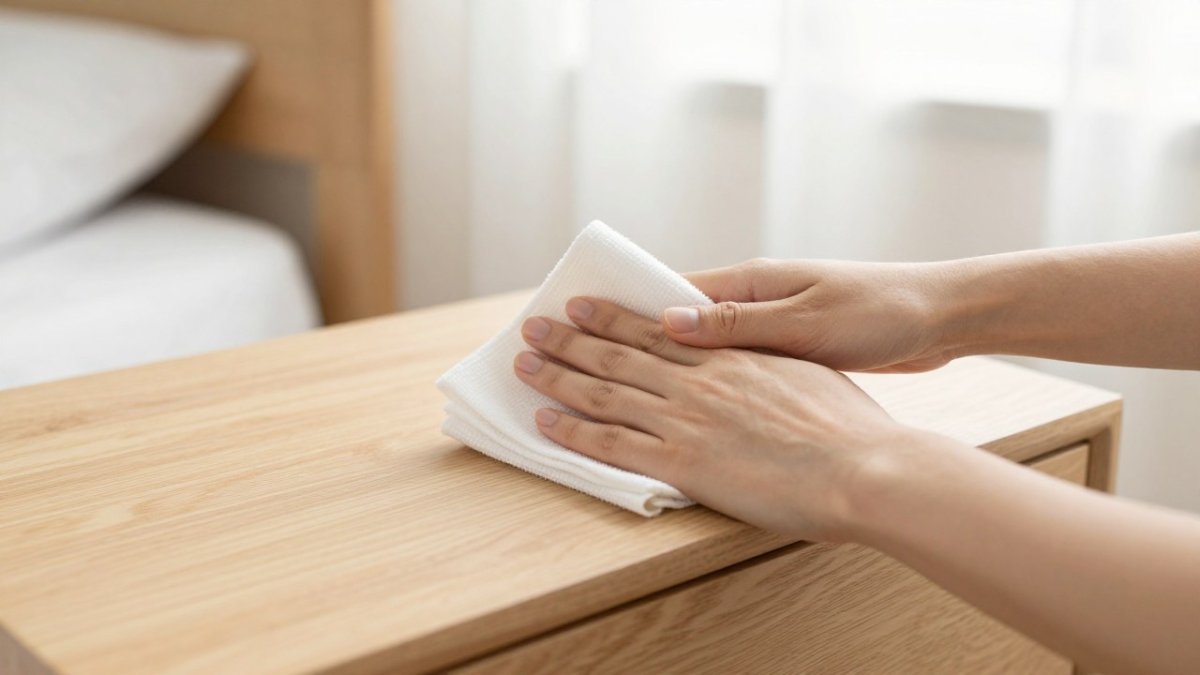
- Dust first, and dust often. Use a soft, dry, lint-free cloth or clean microfibre duster, working in the direction of the grain. On a headboard, start at the top and work down; on slats, run the cloth along each slat rather than across the gaps.
- Clear the surface properly. Move lamps, glasses, alarm clocks and ornaments before you start. Lift the lamp rather than dusting around it, and remove perfume bottles and jars so you can reach the back edge where spills pool.
- Dampen the cloth, then wring it out hard. It should be only slightly damp, not dripping. Sealed, varnished and lacquered finishes take a lightly damp cloth; oiled or waxed finishes need a drier cloth and quick wipe; painted finishes need care at edges and corners where water can creep under the paint.
- Use a mild cleaner only where needed. Add a single drop of washing-up liquid to a bowl of warm water, or use a cleaner made for wood. Spray onto the cloth, not the wood, and keep moisture away from veneered edges and joints where water can lift the veneer.
- Wipe in the direction of the grain. Work along the length of each piece, following the grain direction of each panel, which may change from piece to piece.
- Dry straight away. Use a second dry cloth to remove moisture, paying particular attention to joints, drawer runners and areas around handles.
- Let it air dry fully. Leave drawers and wardrobe doors open for a few minutes so trapped moisture can escape, and do not put clothes or bedding back until the surface is completely dry.
Bedroom-specific cleaning notes:
- Bed frames and joints: Wipe along the frame and around joints with a barely damp cloth, then dry immediately; water trapped in a joint can swell the wood and loosen the fit.
- Slats: Dust between the slats with a microfibre duster or a cloth wrapped around a ruler, and avoid wetting them, as they are often thinner wood that reacts quickly to moisture.
- Headboards: Vacuum upholstered headboards with a brush attachment rather than wiping. Wooden headboards can be cleaned as above, but check behind where dust and condensation collect.
Avoid these common mistakes:
- Using abrasive cloths or scourers. They scratch the finish and leave fine marks.
- Soaking the surface. Water can seep into joints and cause swelling or lifting, especially on veneered and painted pieces.
- Using household sprays with harsh chemicals. Many multi-surface cleaners dull or strip wood finishes; avoid bleach, ammonia or abrasives unless the manufacturer recommends them.
For a gentle option on dry-looking sealed wood, a mix of warm water and a very small amount of olive oil can help, but use it sparingly and wipe off any excess straight away.
How to Polish Wooden Furniture Without Building Up Residue
Polish can bring back shine, but too much of it creates a sticky film that attracts dust. The aim is a thin, even layer.
Follow these steps:
- Clean the surface first. Polish sealed on top of dirt just traps the dirt.
- Choose a polish made for your finish. Check the label for wood furniture and your type of finish.
- Apply a small amount. Put a few drops on a clean, soft cloth, not directly on the wood.
- Work in thin sections. Polish one panel or drawer front at a time, following the grain.
- Buff it off. Use a dry cloth to remove the excess until the surface feels smooth, not greasy.
- Polish only when needed. Most bedroom furniture needs polishing every few months, not every week.
Watch for these signs of too much polish:
- A tacky or sticky feel
- A cloudy or hazy look in the light
- Dust that clings in patches
If this happens, wipe the area with a cloth slightly dampened with warm water, then dry it. Repeat until the surface feels clean again.
How to Protect Wooden Furniture From Scratches and Heat
Prevention is the best form of protection, and in a bedroom the main threats are scratches, heat, moisture and seasonal humidity changes. A few simple habits can save a finish from years of small damage.
Scratches and everyday marks
- Use coasters and mats. Place them under glasses, cups and hot items on bedside tables and dressing tables; a cork or felt base is gentler than hard plastic.
- Lift rather than drag. Dragging a heavy wardrobe or bed frame can scratch both furniture and floor, so ask for help with heavy pieces.
- Add felt pads. Stick small felt pads under legs and feet to stop scratches and reduce noise, checking every few months and replacing them when thin, as a worn pad can trap grit.
Heat and sunlight
- Keep furniture away from direct sunlight. Strong sun can fade and dry out a finish, so use blinds or curtains during the brightest hours and rotate small pieces if one side is fading.
- Keep it away from heat sources (Safe use and storage of cellular plastics: Controlling the fire risk). Radiators, fireplaces and heaters can crack or lift a finish if the furniture sits too close; leave a gap of at least 30 cm where possible.
- Watch for hot items. Hairdryers, hair straighteners and hot drinks can leave white marks or scorch a finish, so let styling tools cool before putting them away and never rest them directly on a wooden surface.
Humidity and seasonal changes
Wood expands and contracts as indoor humidity changes, and bedroom furniture is particularly exposed because bedrooms are often kept warmer and more closed up than living areas. Keeping indoor humidity within a moderate range helps reduce problems, and a simple hygrometer can make it easier to monitor.
- Ventilate regularly. Open windows for a few minutes each day, even in winter, to let moist air out, especially important after showers or cooking.
- Keep furniture away from damp walls. Beds and wardrobes pushed tight against an external wall can trap moisture, so leave a small gap for air to circulate.
- Watch for signs of drying. Small cracks at joints, a dull or rough finish, or loose drawers can indicate the wood is drying out; in very dry conditions, a humidifier can help.
Bedroom-specific protection
- Bed frames and slats: Check slats and joints every few months for looseness, tighten screws or bolts, and replace cracked slats promptly so the mattress does not sag.
- Wardrobes: Do not overfill wardrobes, as pressure on doors and shelves can strain hinges and joints; leave a little space for air to circulate inside.
- Bedside tables and dressing tables: Use trays or mats for everyday items, and wipe up spills immediately, as a small spill left overnight can lift a finish.
Light scratches on a sealed finish can often be softened with a matching wax crayon or furniture touch-up pen, testing the colour first on a hidden area. For deeper scratches, dents or finish wear, a professional restorer can advise on whether a repair or refinish is worthwhile; trying to sand or refinish a veneered or painted piece yourself can make the damage worse.
How to Remove Water Marks From Wood Furniture
Water marks are one of the most common problems on bedroom furniture. They often look like white rings or cloudy patches.
For light marks, try this method:
- Dry the area. Wipe away any remaining moisture with a soft, dry cloth.
- Apply a little furniture polish or wood-safe cream. Rub it gently in the direction of the grain.
- Buff the area. Use a clean cloth to work the product in, then polish off the excess.
- Check the result. If the mark has faded, repeat once more if needed.
For darker or deeper marks, a mix of equal parts white vinegar and water can help.
If the mark has gone through the finish and into the wood, cleaning will not fix it. In that case, a furniture restorer or a skilled repair service can sand and refinish the area.
Set Up a Simple Care Schedule for Your Bedroom Furniture
A routine makes care easy to keep up. Here is a simple schedule for most bedroom pieces:
- Weekly: Dust with a soft, dry cloth. Wipe away any fingerprints or spills.
- Monthly: Wipe down with a lightly dampened cloth, then dry straight away. Check for loose handles and wobbly legs.
- Every three to six months: Apply a thin layer of suitable furniture polish or wood cream, then buff it off.
Keep a small care kit in a cupboard close to the furniture. Include a few soft cloths, a microfibre duster, a bottle of wood-safe polish and some felt pads.
Good wooden furniture can last for decades with simple care. If you are thinking about replacing a worn piece, the team at HSH-furniture-northants can help you find well-made bedroom furniture that suits your home.
The routine below summarises how often each care task should be done.
| Task | Frequency | Notes |
|---|---|---|
| Dust with a soft, dry cloth | Weekly | Also wipe away fingerprints or spills |
| Wipe with a lightly dampened cloth | Monthly | Dry straight away; check handles and legs |
| Apply thin layer of furniture polish or wood cream | Every 3-6 months | Buff off the excess |
| Inspect for scratches, lifting finish or cracks | Once a year | Note anything needing professional repair |
Frequently Asked Questions
How often should you clean wooden bedroom furniture?
Dust wooden bedroom furniture once a week with a soft, dry microfibre cloth, which lifts dust without scratching the finish. A deeper clean with a barely damp cloth is usually enough every one to three months, or sooner if the room gets dusty or you notice sticky residue. Bedrooms with open windows, pets or heating vents tend to need more frequent dusting. Always wipe in the direction of the grain and dry the surface straight after, so moisture never sits on the wood.
Can you use polish on wooden bedroom furniture?
Yes, but use a furniture polish made for the finish you have and apply it sparingly. Over-application leaves a greasy film that attracts dust and can make the surface look cloudy over time. Test any product on a hidden area first, such as the underside of a bed frame, and leave it to dry before judging the result. Polish is a maintenance step, not a cleaning step, so clean the surface first and polish only once or twice a year.
How do you protect wooden furniture from scratches?
Use felt pads under lamps, decorative objects and bedside items, and keep sharp or gritty objects off the surface. Place coasters under glasses and mugs, and avoid dragging bed frames or wardrobes across the floor, lifting them instead. Use rugs or floor protectors where furniture is moved regularly. Keep grit off surfaces by dusting often, since small particles act like sandpaper when the furniture is wiped or bumped.
What should you avoid when cleaning wooden furniture?
Avoid soaking the wood, abrasive scouring pads, strong household chemicals and silicone-based sprays, which can damage the finish or leave a residue that is hard to remove. Do not use excessive water or leave any damp cloth sitting on the surface. Test any cleaner in a hidden spot first and keep solutions mild. If the finish is already damaged or the piece is an antique, seek advice from a furniture restorer before attempting deeper treatments.