
Currently Empty: £0.00
0 Comments
Quick Summary
Choose sofa fabric by first matching it to how the room is used: light use, daily family use, or heavy use with children and pets. Then check the Martindale rub count, the cleaning code, and how much sunlight the sofa gets. Testing a sample at home before buying confirms the choice.
- Sort your household into light, daily or heavy use before looking at swatches.
- Daily and heavy use call for hard-wearing fabric; light use allows softer or delicate looks.
- A rub count under 15,000 suits light use, while over 30,000 suits heavy use.
- Check the cleaning code: W, S, W/S or X tells you how the fabric can be cleaned.
- Test a sample at home by rubbing it, leaving it in sunlight and checking it in daylight and lamplight.
Table of Contents
- Start With How the Sofa Will Be Used
- Understanding Martindale Rub Count Explained
- Natural vs Synthetic Upholstery Fabrics
- Best Sofa Fabric for Pets and Children
- Durability, Stain Resistance and Cleaning Codes
- Sunlight, Breathability and Comfort Considerations
- Testing Fabric Yourself Before You Buy
- Choose Your Sofa Fabric and Book a Consultation
- Frequently Asked Questions
Start With How the Sofa Will Be Used
Last Updated: October 30, 2026
Choosing how to choose right sofa fabric starts with one question: what will the sofa actually do all day? Shoppers often fall for a colour or texture in the showroom, then find it wears badly in the room it was meant for.
Before you look at swatches, sort your household into three simple groups:
- Light use: A formal lounge used for guests and weekend TV
- Daily use: A main family sofa sat on every evening
- Heavy use: Homes with young children, pets or frequent visitors
The group you land in tells you how tough the fabric needs to be. Daily and heavy use call for hard-wearing cloth. Light use gives you more freedom to pick a soft or delicate look.
Think about sunlight and cleaning too. A sofa by a large south-facing window fades faster than one in a shaded corner. A sofa you’ll clean with a damp cloth needs a different finish than one you’ll need to take to a specialist.
Watch out: Many people buy a beautiful velvet for a busy family room, then regret it within a year. Match the fabric to the real life of the room, not the look you hoped for.
Understanding Martindale Rub Count Explained
Every upholstery fabric should come with a rub count, and it is the fastest way to compare durability. The Martindale test rubs a fabric sample with a standard abrasive until it wears through or shows visible damage (bsigroup.com). The result is a number of rubs. Higher numbers mean a tougher fabric.
As a rough guide for home use, the figures below are a practical starting point:
| Rub count | What it suits |
|---|---|
| Under 15,000 | Light use, formal rooms, occasional sitting |
| 15,000 to 30,000 | Average family use |
| Over 30,000 | Heavy use, children, pets, frequent sitting |
A word of caution: a high rub count measures abrasion resistance only. It does not tell you how the fabric handles stains, sun or pilling. Use the number as one factor alongside the others in this guide.
If a fabric has no rub count listed, ask the retailer for it before you commit. A reputable seller should be able to tell you.
Natural vs Synthetic Upholstery Fabrics
Upholstery fabrics fall into two broad families. Natural fibres come from plants or animals. Synthetic fibres are made from polymers such as polyester, nylon and acrylic. Many good sofas use a blend of both.
Natural fibres tend to feel softer and breathe better because their structure is irregular and absorbent. Cotton fibres are hollow and twisted, which lets air move through the weave.
Synthetic fibres are engineered for consistency. Polyester is hydrophobic, meaning it resists water-based stains and dries quickly. Nylon is exceptionally strong for its weight and resists abrasion well, which is why it appears in many performance blends. Acrylic mimics wool but has better UV resistance.
A common approach is to pick a synthetic or a blend for family homes, and a natural fibre for formal or low-traffic rooms. Blends often give you the look of a natural fabric with the toughness of a synthetic one.
Pros and cons of cotton, linen, velvet and leather
Cotton
- Pros: soft, breathable, wide range of colours and patterns, takes dye well
- Cons: stains easily, can crease, fades in strong sun, low abrasion resistance compared with synthetics
Linen
- Pros: relaxed, natural look, breathable, good for warm rooms, stronger wet than dry
- Cons: creases badly, shows wear at flex points, needs careful cleaning, poor resistance to sunlight fading
Velvet
- Pros: rich appearance, feels luxurious, hides dust well, dense pile can resist surface staining
- Cons: can mark or flatten under heavy use, shows pet hair, needs regular brushing, pile can crush in high-traffic areas
Leather
- Pros: very durable, wipes clean, develops character over time, resistant to most spills if wiped promptly
- Cons: costly, can crack without conditioning, can feel cold in winter and sticky in summer, scratches show on some finishes
Mix and match these with your household groups from the first section. A linen-cotton blend in a quiet lounge may suit you well. Leather often works better in a busy family room. But also consider the weave: a tight plain weave in cotton will outperform a loose basket weave in the same fibre. And a synthetic velvet may resist crushing better than a natural silk velvet.
Pro Tip
When comparing swatches, ask the retailer for the fibre composition by percentage. A fabric described as “linen-look” may be 100% polyester. The percentage tells you more about performance than the name on the label.
If you want to claim a unique angle, ask about the fabric’s breathability rating or thermal comfort testing. Most retailers won’t have it, but the question signals that you understand the difference between a fabric that looks good and one that feels good year-round.
Best Sofa Fabric for Pets and Children
Pets and children are the toughest test any sofa will face. Claws, spills, sticky fingers and fur all work against fabric. Look for three things: a high rub count, a tight weave and a finish that wipes clean.
Performance fabrics are often the best choice here. These are engineered to resist stains and wear, and many can be cleaned with a damp cloth. Microfibre is another strong option. It is durable, easy to wipe and tends to resist pet hair better than loose-weave cloths.
For pets, avoid loose weaves and deep pile fabrics. Claws catch on them and pull threads. For children, avoid fabrics that show marks easily unless you are happy to clean them often.
Leather is a practical choice for homes with pets. Fur brushes off, and most spills wipe away. Just remember it needs conditioning over time.
Watch out: Pet-friendly claims vary. Ask what the fabric is rated for, and check whether the cleaning advice suits your pet’s habits.
Durability, Stain Resistance and Cleaning Codes
Upholstery labels often include a cleaning code. These codes tell you how the fabric should be cleaned and help you avoid damage. The main codes are:
- W: Clean with water-based cleaners
- S: Clean with solvent-based cleaners only
- W/S: Either water-based or solvent-based cleaners can be used
- X: Vacuum only, do not use liquid cleaners
Always check the code before you buy. A fabric marked X needs a very different routine from one marked W. But the code alone doesn’t tell you how stain-resistant the fabric is, it tells you how to clean it without causing harm.
For stain resistance, look for fabrics with a protective finish. Many performance fabrics come treated this way, and some retailers offer extra protection.
Test a small hidden area first before you use any cleaner. Sofa fabric safety can depend on the exact finish, so check the care guidance that comes with the sofa. If you use the wrong cleaner on an S-coded fabric, you can set a stain permanently or damage the finish.
Durability comes down to the combination of fibre, weave density and finish. A dense, tightly woven synthetic blend usually outlasts a loose natural weave, even when both have similar rub counts. But rub count is only one measure. Pilling resistance, colourfastness to light and rubbing, and seam strength all matter.
Watch Out
Never assume a fabric is cleanable just because it has a high rub count. A tough fabric can still stain permanently if the wrong cleaning agent is used. Always follow the cleaning code.
For a unique angle, ask about the fabric’s warranty terms. Many manufacturers offer warranties that cover specific performance issues such as pilling, fading or seam slippage for a set number of years. The warranty often reveals what the manufacturer is confident about, and what they are not.
Sunlight, Breathability and Comfort Considerations
Sunlight is a quiet enemy of upholstery. Strong direct light fades dyes over months and years. If your sofa will sit in a sunny spot, choose a fabric with UV resistance or a fade-resistant finish. Darker and more saturated colours often show fading more clearly, so pick accordingly.
Breathability matters for comfort. Natural fibres let air move through the fabric, which helps in warm rooms. Some synthetic fabrics feel warmer to sit on in summer. Blends can offer a good middle ground.
Comfort also depends on texture. A smooth, tightly woven fabric is easy to slide across. A nubby or textured one feels softer and warmer but can snag. Sit on a sample for several minutes before you decide. A quick touch test in the showroom is not enough.
Finally, think about thermal comfort. Leather can feel cool in winter and sticky in summer. A woven fabric often feels more even all year round.
Testing Fabric Yourself Before You Buy
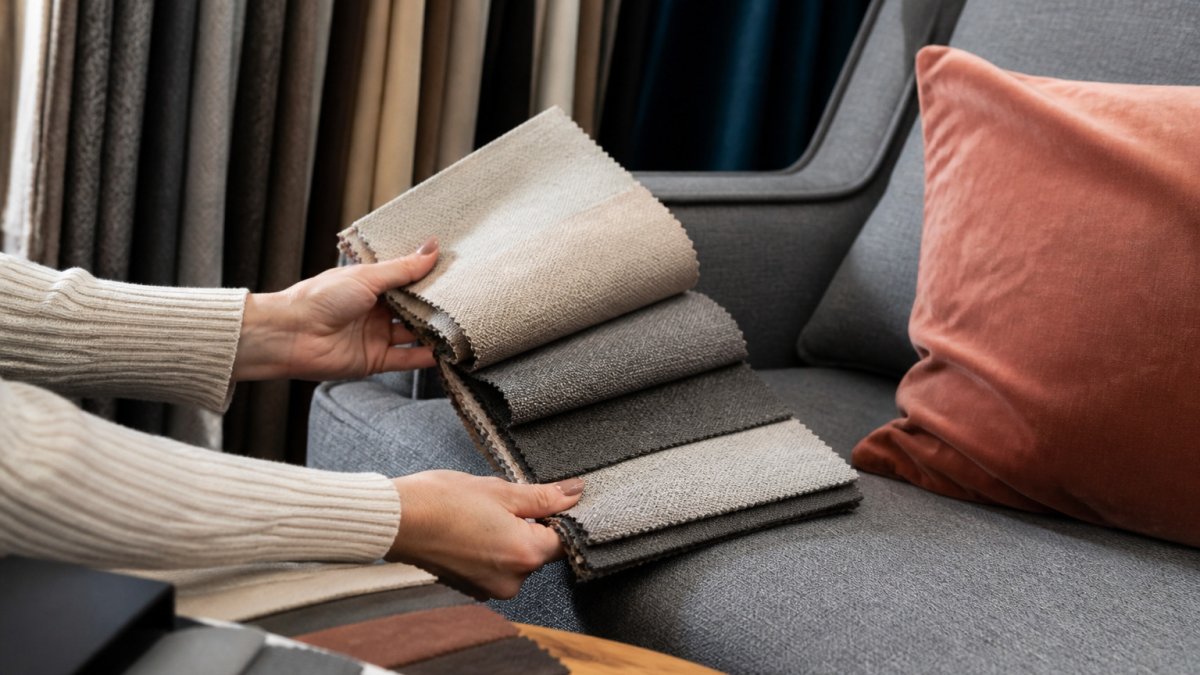
Samples are the best way to test a fabric in your own space. Ask for a swatch and take it home. Then try these simple checks:
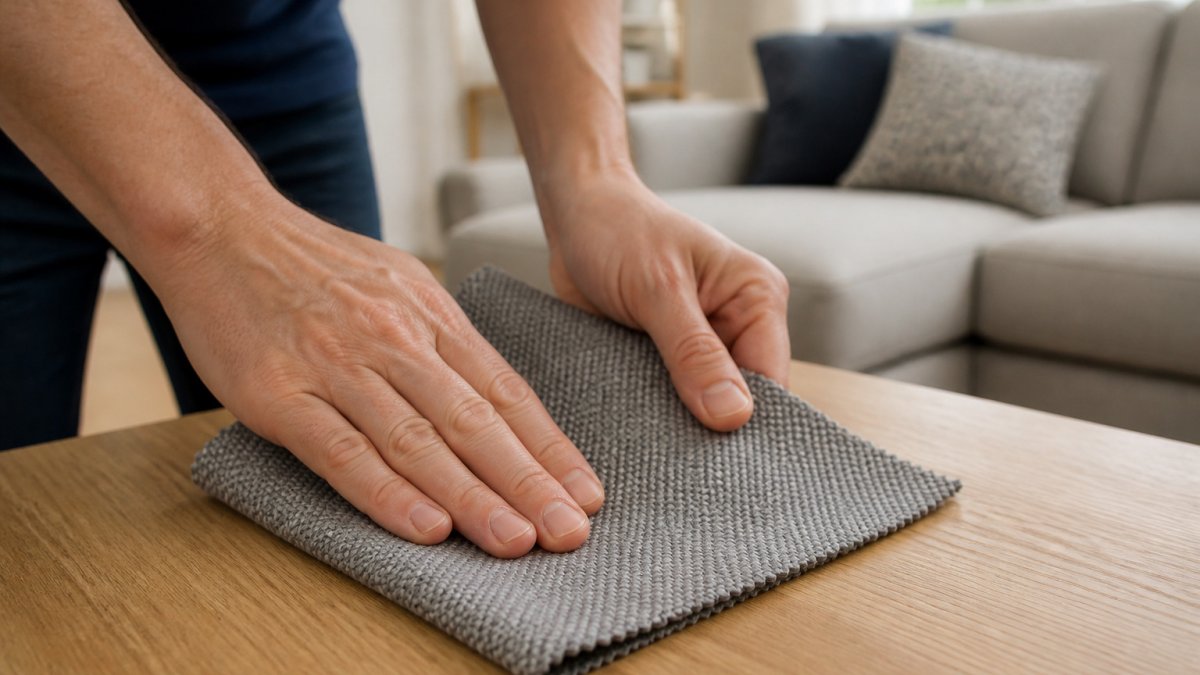
- Rub test: Rub the sample hard with a dry white cloth for 30 seconds. Look for colour transfer or pilling.
- Light test: Leave the swatch near your sunniest window for two weeks. Check for fading.
- Stain test: Put a drop of water and a drop of a mild stain on the fabric. Wait, then wipe. Note what remains.
- Feel test: Sit with the swatch on your lap for a few minutes. Does it feel comfortable?
Bring the swatch back to the room where the sofa will stand. Check it at different times of day. Fabric colour can look very different under lamplight and daylight.
Test at least two fabrics side by side. The difference often becomes obvious only when you compare them directly.
Choose Your Sofa Fabric and Book a Consultation
Choosing the right fabric comes down to how the room will be used, what the fabric is rated for and how it looks in your own light. Start with your household’s daily life, check the rub count and cleaning code, then test samples at home before you commit.
If you would like help narrowing down your options, the team at HSH-furniture-northants can talk you through the choices in person or online. Our Finedon showroom is a place you can visit in person. Get in touch to book a consultation and find a sofa that suits how you really live.
Frequently Asked Questions
Which sofa fabric is most durable for families with pets?
Tightly woven performance fabrics and microfibre blends tend to suit homes with pets best, because they resist snagging and shed hair easily. Look for a high Martindale rub count, ideally 30,000 or more for family use, and check that the fabric is stain resistant and wipeable. Avoid loose weaves and chenille, which can catch claws. Ask the retailer for the fabric’s technical data sheet before you commit.
Is velvet a good choice for a high-traffic sofa?
Velvet can work well in a quieter room, but it is less suited to a high-traffic sofa. Its pile can flatten and show marks from repeated sitting, and it can be harder to clean than a smooth performance fabric. If you want velvet, choose a good-quality synthetic velvet with a high rub count and keep it away from direct sunlight, which can fade the colour over time.
How do I check the Martindale rub count for upholstery fabric?
The Martindale rub count is printed on most fabric data sheets, so check the product information before buying. It measures how many rubs a fabric can take before showing wear under standard testing. For a sofa used daily, aim for at least 30,000 rubs for a domestic setting. If the figure is missing, ask the seller to confirm it in writing.
Should I choose natural or synthetic fabric for my sofa?
Natural fibres such as cotton and linen feel comfortable and breathe well, but they stain and fade more easily. Synthetic fibres such as polyester and microfibre resist stains, wear and sunlight better, and are usually easier to maintain. Many good sofa fabrics are blends that combine both, giving a natural look with added durability.