
Currently Empty: £0.00

0 Comments
Last Updated: October 28, 2026
Quick Summary
When buying beds, first measure the room and the route the bed must travel, then match the exact mattress and frame dimensions. Choose a frame style that suits your décor and storage needs, and pick a mattress firmness that fits how you sleep. Check trial and warranty terms before you order.
- Leave at least 60cm of clearance on each side of the bed where possible.
- Measure doorways, hallways and staircases before ordering, since a bed can fail to fit.
- Check exact dimensions on the listing, because size names vary between manufacturers.
- Firmness scales run from soft (1-3) to firm (7-10) but are only a guide.
- Read trial terms: who pays return delivery and whether frames are included.
Table of Contents
- Start With the Room: Measuring Your Space and Checking Access
- Bed Sizes and Dimensions: Getting the Fit Right
- Bed Types and Frame Options: Choosing Between Styles
- How to Choose a Mattress for Your Sleep Style
- Mattress Firmness Guide: Matching Support to Your Body
- Bed Buying Mistakes to Avoid Before You Order
- Warranties, Returns and Total Cost: Booking Your Bed With Confidence
- Frequently Asked Questions
Buying beds is one of the few purchases you live with every single night, which is why it deserves more care than most. Get it right and you sleep better for a decade. Get it wrong and you are stuck with a mattress that sags, a frame that squeaks, or a bed that simply does not fit through the bedroom door. At HSH-furniture-northants, a family-run retailer with over 35 years of experience serving Northamptonshire, we offer a range of beds and mattresses. This guide covers what to look for when buying beds, from measuring your room through to understanding warranties and total cost.
Start With the Room: Measuring Your Space and Checking Access
Measure the room before you look at a single frame. Note the usable floor space, the position of windows and radiators, and any sloping ceilings or alcoves that could affect how the bed sits. Leave clearance of at least 60cm on each side where possible, so you can make the bed and get in and out without squeezing.
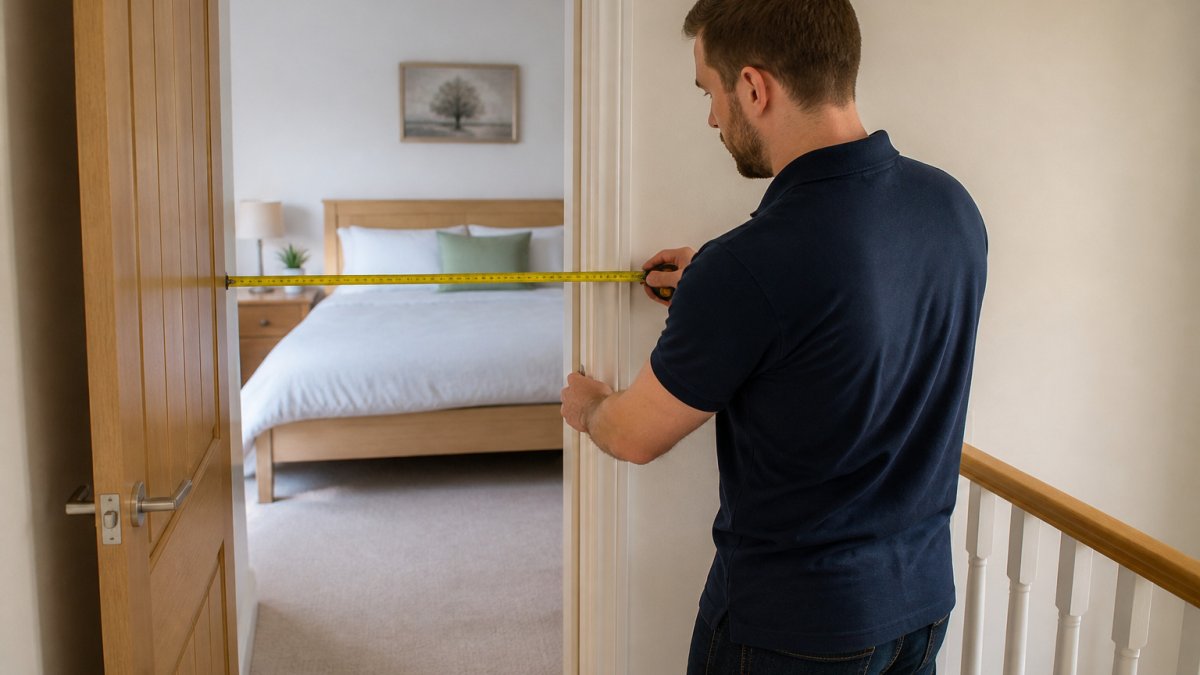
Many buyers focus on the bed and forget the route it has to travel. Measure the doorways, hallways and staircases it must pass through. A bed that arrives assembled may be too wide to clear a standard internal door, and a bed that arrives flat-packed still needs room to be carried in and built.
Checking Access Routes and Delivery Limits
Before you order, check the access route from the front door to the bedroom. Narrow turns, tight stairwells and low loft hatches are common reasons deliveries fail. Check the bed’s dimensions against the access route, because this can determine whether it fits.
Check the headboard dimensions against the access route to the bedroom.
Bed Sizes and Dimensions: Getting the Fit Right
Bed sizes in the UK are usually quoted as single, small double, double, king and super king. Dimensions vary slightly between manufacturers, so always check the exact mattress and frame measurements on the product listing rather than relying on the size name alone. A 4’6″ double and a 5ft king differ by a meaningful amount of width, and that difference matters in a small room.
Think about who sleeps in the bed as well as the room. Consider who will sleep in the bed and how much room you want to leave for walking around. Check that the mattress size matches the frame exactly, since a mismatch leaves gaps that can cause discomfort and wear.
Bed Types and Frame Options: Choosing Between Styles
The main frame styles are divan bases, wooden or metal frames, upholstered beds and ottoman beds. Divan beds offer a solid base and often include drawers, which suits buyers who want storage without extra furniture. Wooden frames give a more traditional look, while upholstered frames bring softness and can be a good choice for a bedroom that needs more visual warmth.
Consider the headboard height and style as part of the room’s overall look. A curved chesterfield frame, for example, makes a strong statement, but it will also take up more visual space than a simple low-profile frame. Choose the style that suits both your décor and how you use the room.
How to Choose a Mattress for Your Sleep Style
Start by thinking about how you sleep. Consider your sleep position and comfort preferences when choosing a mattress.
Consider mattress construction and firmness when choosing a mattress.
Mattress Firmness Guide: Matching Support to Your Body
Firmness is personal, but it is not mysterious. If you need firmer support, you can see the More Support Firm Mattress by Highgate Beds available. Most mattresses are described on a scale from soft (around 1-3), through medium (4-6), to firm (7-10). The number is a guide, not a guarantee: two mattresses both labelled ‘medium’ can feel very different depending on their fillings, spring type and cover. Use the scale to narrow the field, then judge the actual feel.
How sleep position and body weight change what you need
- Side sleepers often benefit from softer mattresses that cushion pressure points like hips and shoulders.
- Back sleepers typically need medium to firm support to keep the spine aligned.
- Stomach sleepers may require a firmer mattress to prevent the lower back from sinking too deeply.
- Heavier individuals generally need a firmer mattress to ensure adequate support and prevent excessive sinking.
What ‘orthopaedic’, ‘ergonomic’ and ‘cooling’ actually mean
These terms are marketing descriptions, not regulated standards. An ‘orthopaedic’ mattress is not a medical device and is not clinically prescribed; it usually means a firmer feel, but there is no independent body that certifies the claim. ‘Ergonomic’ describes a shape or zoning pattern, not a proven health outcome. ‘Cooling’ may refer to a gel layer, breathable cover or open-cell foam, helpful features, but not a guarantee that you will not overheat. Treat these words as hints about construction, and ask what specific materials or design produce the effect.
Pro Tip
If you have a diagnosed back condition, speak to your GP or a physiotherapist before relying on any firmness claim. A mattress can support comfort, but it is not a treatment.
A practical way to test firmness
If you can try a mattress before buying, consider how it feels in your normal sleep position. Check the product information and ask the retailer about any trial terms before ordering.
Bed Buying Mistakes to Avoid Before You Order
Consider both the bed’s appearance and mattress feel, choose a size that suits the room, and check whether a headboard is included.
Consider the bed’s dimensions and the route to the room. Also consider the mattress when choosing a frame.
The most common errors come down to a few predictable checks you can make before ordering.
| Mistake | Cause | Fix |
|---|---|---|
| Bed does not fit through the door | Access route not measured | Measure doorways, hallways and staircases before ordering |
| Gaps between mattress and frame | Mattress size does not match frame | Check that mattress and frame sizes match exactly |
| Bed too large for the room | Size name chosen without checking dimensions | Check exact dimensions on the product listing |
| Mattress feels wrong | Firmness scale used without testing feel | Narrow the field with the scale, then judge the actual feel |
Warranties, Returns and Total Cost: Booking Your Bed With Confidence
Most buying guides stop at the sticker price. The more useful question is what the bed will cost you over its life, and what protection you have if it is not right. Use the checklist below before you order.
Trial periods and returns: read the conditions, not the headline
A ‘100-night trial’ is only as good as its terms. Check:
- Who pays return delivery, some retailers cover collection, others deduct a fee or expect you to arrange it.
- Whether the mattress must be unmarked and in its original packaging, a stained or unbagged mattress may be excluded.
- Minimum trial length, some policies require you to sleep on it for a set number of nights before you can return it.
- Whether the trial applies to the mattress only, frames, headboards and divan bases are often excluded or subject to separate terms.
- What happens to a free or discounted item, a ‘free’ headboard may have to be returned or paid for if the mattress goes back.
Warranties: what is usually covered and what is not
Check the warranty terms for the specific product, including what is covered, how long cover lasts and how to make a claim.
Watch Out
Keep your purchase information and check the product’s warranty terms. According to consumer advice from Citizens Advice ([Year]), you have statutory rights regarding the quality and fitness for purpose of goods purchased.
Total cost of ownership: build the real budget
The price on the product page is rarely the whole cost. A realistic budget includes:
- The frame or base, a divan base, bed frame or adjustable base is a separate cost from the mattress in many listings.
- The mattress, the largest single item, and the one most worth spending on.
- Delivery, check whether it is included, and whether there is a charge for upstairs delivery, a specific time slot or removal of packaging.
- Assembly, flat-packed frames may need tools and two people; some retailers offer assembly for a fee.
- Old bed removal, often a paid add-on, and worth arranging at the point of order.
- Bedding and protection, a mattress protector, sheets and pillows sized to the new bed.
- Replacement horizon, most mattresses are replaced within roughly 7-10 years, so divide the total cost by the expected lifespan to compare value fairly.
For current prices, visit the HSH-furniture-northants website.
Frequently Asked Questions
What all do you need for a new bed?
A new bed may include a bed frame or base, a mattress sized to match, and a headboard if you want one. Check the product information to see what is included. Before ordering, measure the bedroom and the route to it, including stairs, landings and door widths. Check current prices on the HSH-furniture-northants website.
How do I choose the right mattress for my sleeping position?
Mattress comfort and firmness are personal, so consider your preferences when choosing. If you have back problems, speak to a GP or physiotherapist. Check the product information and ask the retailer about any trial terms before choosing.
What mattress should I stay away from?
Check the product information for details about the mattress, including its firmness and any warranty terms. If you have questions, ask the retailer before buying.
What mattress features are worth paying for?
Consider the mattress’s firmness and the product information when deciding which features matter to you. Check current prices on the HSH-furniture-northants website.
What should I check before buying a bed frame?
Check the frame’s dimensions against your mattress and bedroom. Measure the room and the route to it, including stairs, and check the product information for details about the frame.