
Currently Empty: £0.00
0 Comments
Last Updated: November 24, 2026
Quick Summary
Memory foam or springs depends on how you sleep, how warm you run, and how much support you need. Memory foam contours and relieves pressure, while spring mattresses feel responsive, breathe better and usually offer firmer edges.
- Memory foam contours to your body and gives strong pressure relief.
- Spring mattresses are generally cooler and offer more airflow than memory foam.
- Pocket springs isolate movement better than linked open coil (Bonnell) springs.
- Memory foam is a closed-cell foam that absorbs body heat quickly.
- A hybrid mattress combines pocket springs with foam comfort layers.
Table of Contents
- Choosing Between Memory Foam and Springs: Which Is Right for You?
- Memory Foam and Spring Mattresses Compared Side by Side
- How Foam and Spring Mattresses Differ in Feel, Support and Pressure Relief
- Temperature, Cooling Foam and Choosing the Right Foam Type
- Why a Hybrid Mattress Might Suit You Better
- Using a Mattress Firmness Guide to Narrow Your Choice
- Trying Mattresses In Store Before You Commit to Buying
- Frequently Asked Questions
Choosing Between Memory Foam and Springs: Which Is Right for You?
Choosing between memory foam or springs comes down to how you sleep, how warm you run at night, and how much support your body needs. At Beds, Sofas, Bedroom furniture, we know the right answer is rarely the same for two people.
Memory foam is a viscoelastic foam that softens and contours to your body’s shape, while a spring mattress relies on steel coils or pocket springs to push back. You can browse the firm foam mattress to see how a contouring foam feels in practice. Both can give a good night’s sleep, but they feel very different underneath you.
It makes sense to start with your sleep position, body weight and temperature rather than with the brand name on the label.
Memory Foam and Spring Mattresses Compared Side by Side
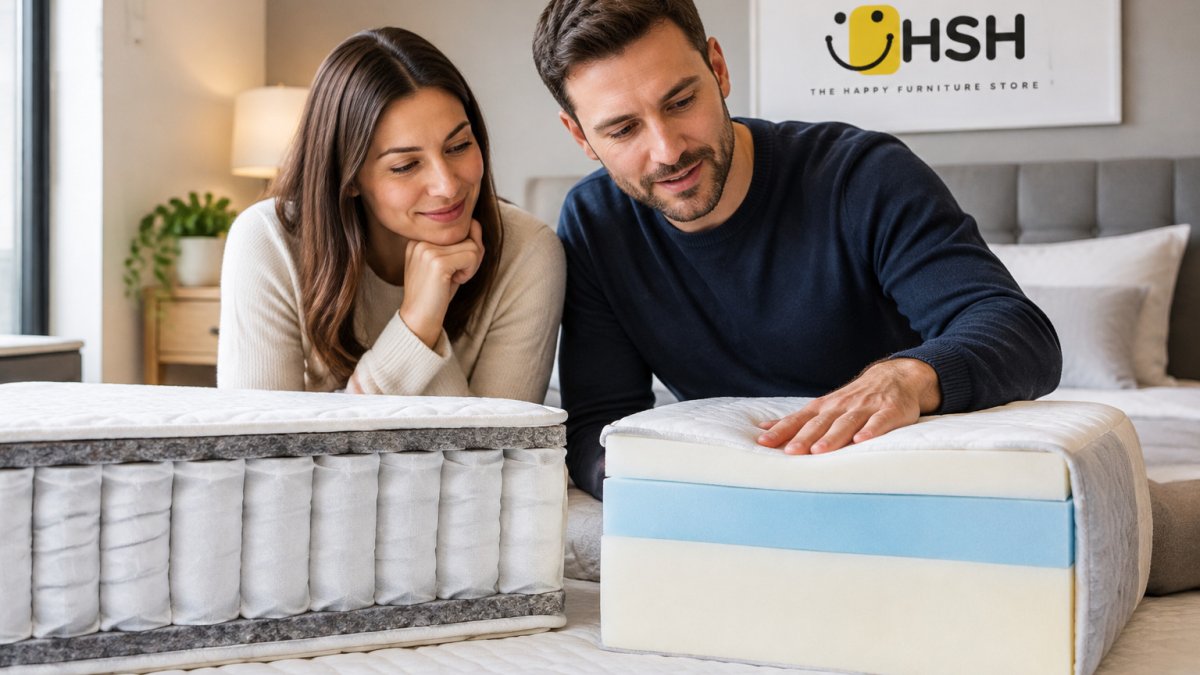
A fair comparison starts with construction, because the label on the outside rarely tells the whole story. A memory foam mattress is built from layers of viscoelastic foam, often with a denser support core underneath. A spring mattress uses a steel coil unit, and many so-called spring mattresses also include foam comfort layers on top. That means the two categories overlap more than the marketing suggests.
Spring units are not all the same. Open coil (Bonnell) springs are linked together, so movement travels across the bed and edges can feel soft. Pocket springs are individually wrapped in fabric, so each coil responds on its own. See the pocket spring mattress for an example of this construction. Spring count matters, but it is not a simple more-is-better number: coil gauge, coil height and the number of active coils in your sleeping area matter more than a headline count.
On the foam side, density and cell structure change how a mattress feels and how long it lasts. When weighing memory foam or springs, note that memory foam is a closed-cell foam that absorbs body heat quickly, which some sleepers love in winter and find unbearable in summer. Open-cell foam allows air to move through the mattress, cooling gel foam is designed to draw heat away from the surface, carbon-infused foam is chosen by some for a more supportive, stress-relieving feel, and high-density luxe foam gives firmer support for people who want extra back support.
| Feature | Memory foam | Spring (pocket) |
|---|---|---|
| Feel | Contouring, hugs the body | Responsive, springy |
| Pressure relief | Strong | Moderate, depends on comfort layers |
| Motion isolation | Very good | Good with pocket springs |
| Temperature | Can run warm | Generally cooler, more airflow |
| Edge support | Often weaker | Usually stronger |
| Construction detail | Foam layers over a support core | Individually wrapped coils plus comfort layers |
| Best suited to | Sleepers who want contouring and pressure relief | Sleepers who want bounce, airflow and easy movement |
Pros of memory foam: excellent pressure relief, quiet, strong motion isolation.
Cons of memory foam: can sleep warm, can feel hard to change position on.
Pros of spring: breathable, responsive, firm edges for sitting on.
Cons of spring: less pressure relief on its own, can transmit more movement without good pocketing.
A practical way to choose is to score each mattress against your own priorities. Write down the five things that matter most to you, for example pressure relief, temperature, motion isolation, edge support and ease of movement, and rank them. Then compare two or three shortlisted mattresses against that list rather than against a generic star rating. Sleepers who wake with sore hips or shoulders often score pressure relief highest, while couples who disturb each other often score motion isolation highest. If you score temperature and responsiveness at the top, a pocket spring or hybrid usually wins; if contouring and pressure relief top the list, a foam mattress usually wins.
Watch out: a spring mattress with a thick foam top layer can feel and perform much like a foam mattress, so judge the whole build rather than the category name.
How Foam and Spring Mattresses Differ in Feel, Support and Pressure Relief
Support is about keeping your spine in a neutral line, and that depends as much on the core as on the top layer. A well-built spring core gives firm, even support, while foam supports by cradling, which suits some sleepers far better than others.
Pressure relief is where foam is most often chosen. If you wake with sore hips or shoulders, a comfort layer that moulds to your shape can make a noticeable difference. Heavier sleepers often prefer a firmer core, whichever type you choose, so that the mattress does not sag under body weight.
Temperature, Cooling Foam and Choosing the Right Foam Type
Choosing a foam matters, because people run hot or cold in very different ways. Memory foam is a closed-cell foam that absorbs body heat, which can feel lovely in winter but uncomfortable in summer for many sleepers.
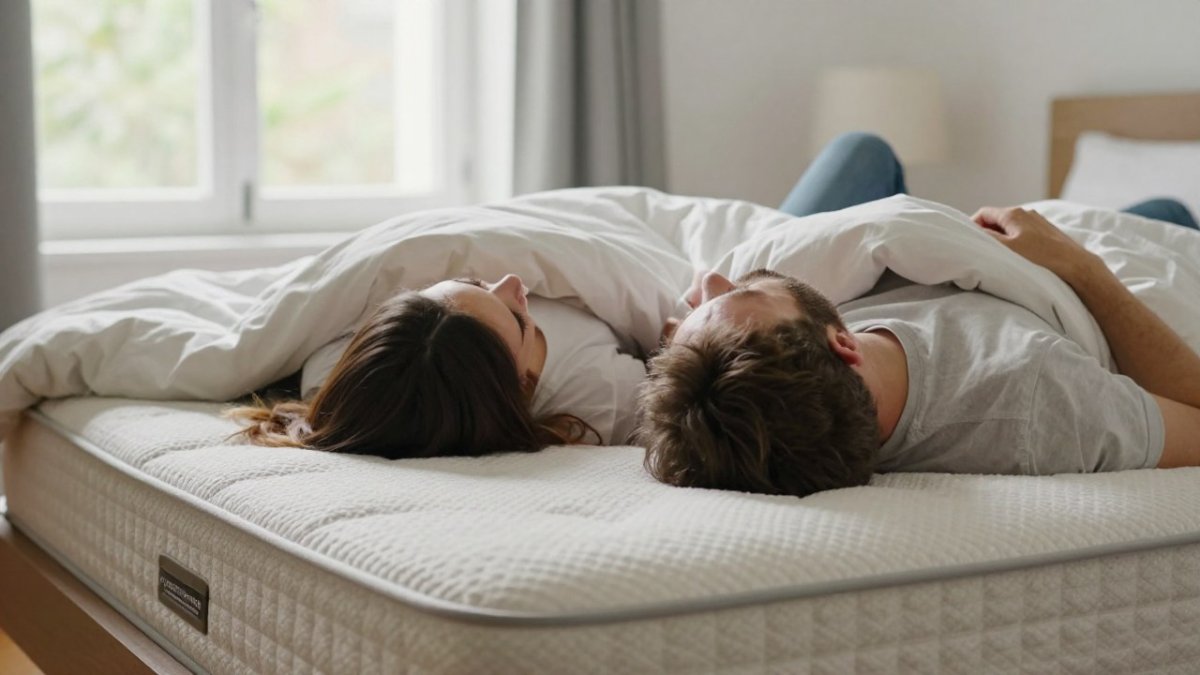
Consider these options when you shop for a foam mattress:
- Open-cell foam: breathable, lets air move through the mattress.
- Cooling gel foam: designed to repel heat and keep the surface cooler through the night.
- Carbon-infused foam: often chosen for stress relief and a more supportive feel.
- High-density luxe foam: firmer support for people who want extra back support and a solid base.
It helps to think about your usual temperature in bed before choosing a foam, not after.
Why a Hybrid Mattress Might Suit You Better
A hybrid mattress combines a pocket spring core with foam comfort layers, so you get the responsiveness and airflow of springs with the pressure relief of foam. Hybrids are a sensible middle path if you cannot decide between the two.
Hybrid mattresses, combining a pocket spring core with a built-in comfort topper, are designed to ease pressure from sore joints. If you are unsure, a hybrid is often a balanced choice.
Using a Mattress Firmness Guide to Narrow Your Choice
A firmness guide is most useful when you treat it as a shortlisting tool rather than a verdict. Firmness scales usually run from 1 (very soft) to 10 (very firm), but the same number can feel very different depending on construction: a medium pocket spring mattress and a medium memory foam mattress rarely feel alike under the body. For a broader look at solid wood beds and matching bedroom furniture, see the Dunelm alternatives buyer’s guide.
Start with sleep position. Side sleepers often prefer a softer to medium feel so the shoulder and hip can sink in and keep the spine level. Back sleepers usually do best on a medium feel that supports the lower back without creating a gap. Stomach sleepers often need a firmer surface so the hips do not sink and overarch the lower back. Combination sleepers should prioritise a responsive surface that is easy to change position on.
Body weight changes the calculation. Lighter sleepers often find firmer mattresses feel harder than expected because they do not sink into the comfort layers. Heavier sleepers usually need a firmer, denser core so the mattress does not sag under body weight, whichever type they choose. A common pattern is that a mattress rated medium feels firm to a lighter sleeper and soft to a heavier one.
Pain and pressure points deserve their own line in the guide. If you wake with sore hips or shoulders, a contouring comfort layer usually helps; if you wake with lower back ache, a firmer, more even core is often the priority. This is general guidance, not medical advice, if you have a diagnosed condition or persistent pain, speak to a clinician before relying on a mattress to solve it.
A simple decision framework:
- Rank your top three priorities: pressure relief, temperature, motion isolation, edge support or ease of movement.
- Match your sleep position to a starting firmness range.
- Adjust for body weight: lighter sleepers often go softer, heavier sleepers firmer.
- Shortlist two or three mattresses that fit the brief.
- Test each one in your usual sleep position for at least ten minutes before deciding.
Watch out: firmness ratings are not standardised across retailers, so compare the construction and comfort layers rather than the number alone.
Trying Mattresses In Store Before You Commit to Buying
It is always better to try a mattress in person and lie on it before you buy. Buying a mattress online without trying it first can lead to a purchase that is not quite right.
At our Finedon showroom, you can try the range in person before you buy.
Look for mattresses that come with a full guarantee. Lie on the mattress for at least ten minutes in your usual sleep position before you decide, and bring a partner if you share the bed. For more help choosing, visit our showroom or speak to our team about the right mattress for your sleep.
Frequently Asked Questions
Is memory foam or a spring mattress better?
Neither is better for everyone. Memory foam contours closely to the body and relieves pressure well, which many side sleepers prefer. Spring mattresses offer a firmer, more responsive feel with good airflow and bounce, often suiting back and stomach sleepers. Your sleeping position, body weight and whether you run warm or cold should guide the decision. Trying both in store before buying helps you judge how each feels under your own body.
What is the difference between memory foam and pocket springs?
Memory foam is a solid layer of foam that softens and moulds to your shape under body heat and pressure. Pocket springs are individually wrapped steel coils that move independently, so each section of the mattress responds to the body beneath it. Pocket springs typically feel more responsive and breathable, while memory foam offers a closer, cushioned contour. The support core and the comfort layers both affect how the mattress feels overall.
Are spring mattresses cooler than memory foam?
Generally, yes. Spring mattresses have open space between the coils, which allows air to circulate and lets heat escape. Traditional memory foam is a closed cell foam that can hold body heat, which some sleepers find uncomfortable in warmer months. Cooling gel foam and open cell foam are designed to improve breathability, so if temperature is a concern, look at the specific foam construction rather than the category alone.
Which mattress is better for back pain: foam or springs?
The right choice depends on your body and the support you need. Many people with back discomfort prefer a mattress that keeps the spine aligned, with enough firmness to stop the hips sinking too far. A high density foam or a well-supported pocket spring system can both achieve this. If you have ongoing back pain, speak to a GP or physiotherapist before choosing, and try a mattress in store so you can judge support for yourself.
Is a hybrid mattress better than memory foam?
A hybrid mattress combines a pocket spring core with foam or other comfort layers, aiming to offer the responsiveness and airflow of springs together with the pressure relief of foam. Whether it is better depends on what you prioritise. If you want contouring without the heat retention of a full memory foam mattress, a hybrid is worth considering. Compare the layers and firmness, as construction varies between models.
How do I choose a mattress firmness?
Start with your sleeping position and body weight. Side sleepers usually need a softer surface to cushion the shoulders and hips, while back and stomach sleepers often need firmer support to keep the spine level. Heavier sleepers generally need more support than lighter ones. Lying on a mattress for several minutes, in your usual sleeping position, is one of the most reliable ways to judge firmness.
Should I try a mattress in store before buying it?
Yes. Trying a mattress in person lets you assess support, pressure relief and comfort in your own sleeping position, which is hard to judge from a product description or online photo. At HSH, you can try the range in our Finedon showroom before you buy. Taking the time to test options in person helps avoid costly mistakes.