
Currently Empty: £0.00
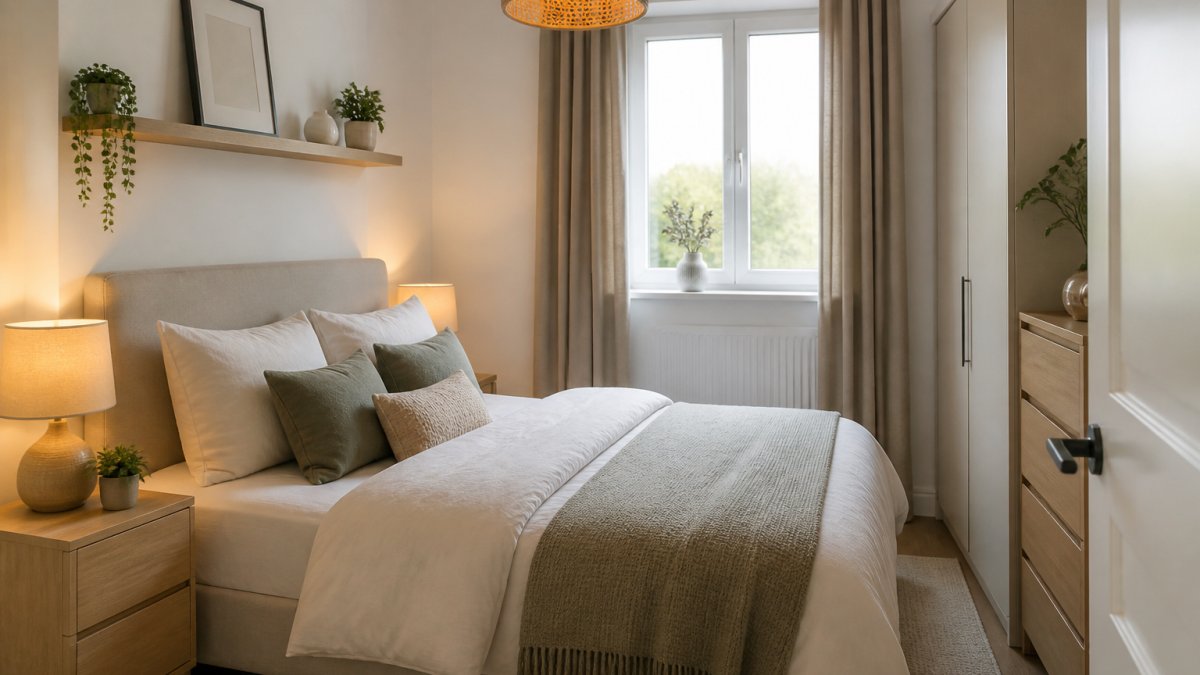
0 Comments
Last Updated: October 23, 2026
Quick Summary
How to style a small bedroom starts with choosing proportional furniture and positioning your bed against the longest wall to anchor the space visually. Use light colours, reflective surfaces, layered lighting, and hidden storage to make the room feel larger while maintaining functionality and comfort.
- Position the bed against the longest wall opposite the door to free up floor space and create a visual anchor
- Use a single bed or small double in rooms under 12 square metres, or a standard double in rooms 14-16 square metres
- Leave at least 60cm of clear floor space on both sides of the bed for comfortable movement
- Use light neutral colours, mirrors, and reflective surfaces to expand visual space without changing actual dimensions
- Consolidate storage into one or two well-placed pieces rather than scattering multiple storage units around the room
Table of Contents
- Start with Proportional Furniture and Smart Bed Placement
- Small Bedroom Layout Ideas That Maximise Floor Space
- Small Bedroom Storage Ideas Without Visual Clutter
- How to Make a Small Bedroom Look Bigger with Colour and Light
- Small Bedroom Decorating Ideas on a Budget
- Common Mistakes to Avoid in Small Bedroom Styling
- Frequently Asked Questions
Start with Proportional Furniture and Smart Bed Placement
How to style a small bedroom starts with one fundamental choice: your bed. The bed dominates a compact room, so its size and placement determine everything else. A bed that’s too large swallows the space.
For rooms under 12 square metres, a single bed or small double gives you breathing room. Consider a quality small double mattress that fits proportionally in compact bedrooms. Browse bedroom furniture options to find appropriately scaled pieces for your compact room.
Bed placement is equally critical. Position the bed against the longest wall, ideally the wall opposite the door. This creates a visual anchor and frees up floor space for movement.
Low-profile bed frames work better than tall ones. A frame 30-40cm high creates sightlines that make the room feel taller. Tall headboards and footboards consume visual space.
At HSH-furniture-northants, we help customers select bed frames that balance style with proportion. Our range includes compact frames designed specifically for smaller bedrooms.
Pro Tip
Measure your room’s exact dimensions before shopping. Account for wardrobes, windows, and doors. A bed that fits the dimensions on paper but blocks a door swing creates a dysfunctional room.
Choose the right bed size based on your room’s total area.
| Room Size | Recommended Bed Type | Bed Dimensions |
|---|---|---|
| Under 12 sq m | Single or small double | Not specified |
| 14-16 sq m | Standard double | 135cm × 190cm |
| Ideal bed frame height | Low-profile | 30-40cm |
Small Bedroom Layout Ideas That Maximise Floor Space
Room layout determines whether a small bedroom feels functional or cluttered. The goal is clear pathways and defined zones.
Room dimensions and furniture scale
Start with the fundamentals: measure your room length, width, and ceiling height. Small bedrooms typically range from 10-20 square metres. In a 3m × 4m room, every piece of furniture competes for space.
Scale matters more than style. A full-sized wardrobe that would look fine in a larger room dominates a small one. Instead, use a narrow single wardrobe (50-60cm wide) or wall-mounted open shelving. Bedside tables should be compact, 40cm wide maximum.
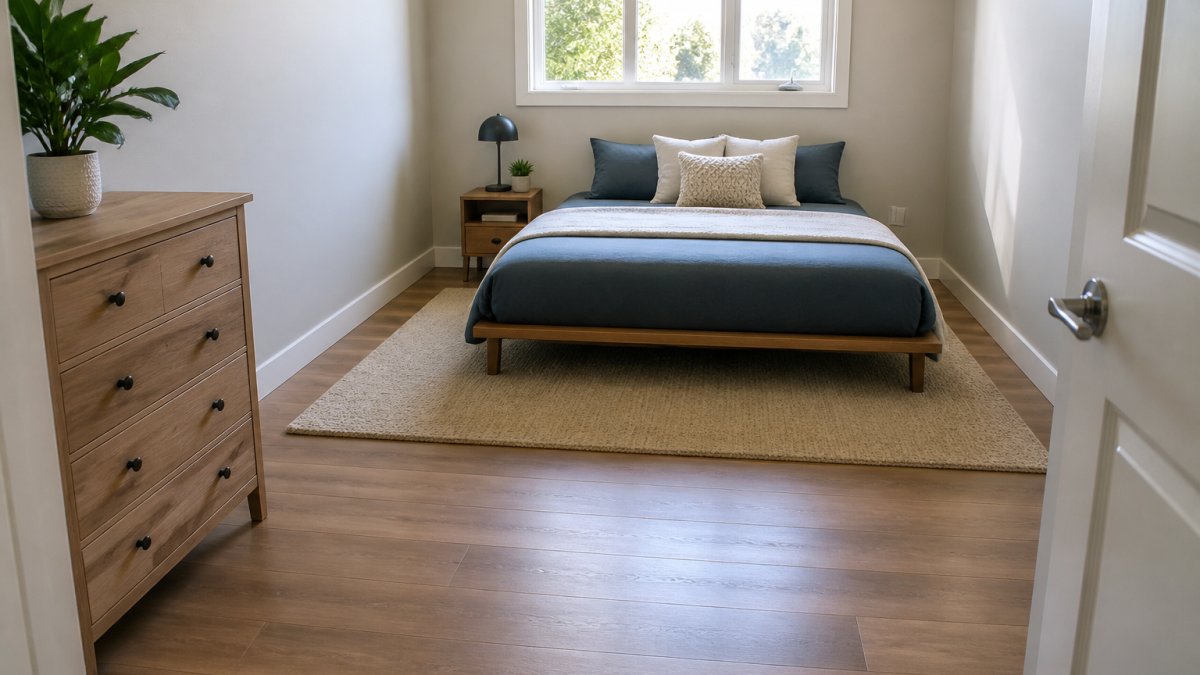
Floating furniture, mounting items on walls rather than placing them on the floor, creates the illusion of more floor space. Wall-mounted desks, floating shelves, and wall-hung storage all contribute to this effect.
Positioning for accessibility and movement
Leave at least 60cm of clear floor space on both sides of the bed for comfortable movement. If your room is rectangular, position the bed lengthwise along the longest wall. This leaves the width of the room open for circulation.
Traffic flow matters. The most direct path from the door to the window or wardrobe should be unobstructed. If furniture blocks this natural route, the room feels cramped even if it technically has enough space.
For renters, floor-based layouts work better than wall modifications. Use a bed with under-bed storage rather than built-in shelving. Freestanding wardrobes beat fitted ones. This flexibility means you can adapt the layout if your space changes.
Key Takeaway
The best small bedroom layout creates one clear walking path and positions the bed to anchor the room visually. Everything else arranges around this foundation.
Small Bedroom Storage Ideas Without Visual Clutter
Storage is the difference between a small bedroom that feels organised and one that feels cramped. The trick is hiding storage, not displaying it.
Under-bed and vertical storage solutions
Under-bed storage is invisible storage. Shallow drawers (15-20cm deep) slide under most bed frames and hold seasonal clothes, extra bedding, or shoes. This approach keeps items accessible without consuming wall or floor space.
Vertical storage transforms walls into functional space. Wall-mounted shelves above the desk or beside the bed add capacity without footprint. Install shelves at eye level or above to avoid creating visual clutter at ground level.
Corner spaces often go unused. Explore sliding door wardrobes that maximize vertical storage without adding visual bulk to small bedrooms. A tall, narrow corner shelf unit (20-30cm wide) uses dead space without blocking movement.
Open shelving looks best when items are minimal and styled intentionally. Too many visible items create visual noise.
Decluttering and storage planning by household type
Storage needs vary by how you live. A single person needs less clothing storage than a couple. Parents need toy storage; professionals need desk space.
For singles, a single wardrobe (150cm wide) plus wall-mounted shelves above usually suffice. Focus storage on rotation, seasonal items go in under-bed drawers.
For couples sharing a small bedroom, negotiate wardrobe space carefully. Two narrow wardrobes (70-80cm each) positioned on opposite walls work better than one large one. This distributes visual weight and gives each person defined space.
For parents with young children, toy storage is non-negotiable. Low, open bins on shelves let children access items independently. Label bins clearly. As children grow, rotate storage types, toy bins become book storage, then clothing storage.
Watch Out
Visible clutter in a small bedroom magnifies the sense of cramped space. Every item on a shelf, desk, or floor competes for visual attention. The smaller the room, the more ruthlessly you must edit what stays visible.
How to Make a Small Bedroom Look Bigger with Colour and Light
Colour and light are psychological tools. They don’t change the room’s actual size, but they change how it feels.
Light colour palettes and reflective surfaces
Light, neutral colours expand visual space. Whites, soft greys, pale blues, and warm beiges reflect light and create airiness. Paint walls a light colour. Use pale bedding. Choose light-coloured curtains or blinds.
This doesn’t mean the room must be bland. Layer textures and tones within a light palette. Cream walls with white bedding and pale grey cushions create depth through subtle variation, not colour contrast.
Reflective surfaces amplify light. Mirrors are the most effective tool. A large mirror opposite a window bounces natural light around the room. Avoid placing mirrors where they reflect clutter, position them to reflect light or a pleasant view.
Glossy finishes on furniture and accessories reflect light better than matte ones. A bed frame with a subtle sheen works better than a flat, matte finish.
Dark accent walls work in small bedrooms only if used sparingly.
Layered lighting and natural light maximisation
Layered lighting means multiple light sources at different heights. A single overhead light creates harsh shadows and doesn’t flatter a small space. Instead, use:
- Ambient lighting: Overhead light or wall sconces that provide general illumination
- Task lighting: A desk lamp or reading light for focused work
- Accent lighting: A small table lamp or string lights that add warmth
Position lights at different heights. A bedside lamp at 60cm, a wall sconce at 150cm, and overhead light at ceiling height create visual depth.
Natural light is your best ally. Maximise it by keeping windows unobstructed. Sheer curtains filter harsh sunlight while maintaining privacy and light flow. Avoid heavy, dark curtains that block light.
If natural light is limited, use warm-toned bulbs (2700K colour temperature) to create a cosy atmosphere rather than trying to replicate daylight with cool, harsh lighting.
Small Bedroom Decorating Ideas on a Budget
Styling a small bedroom doesn’t require expensive furniture or decor. Explore complete bedroom sets designed for budget-conscious decorating that combine proportional furniture with smart styling. Strategic choices matter more than spending.
Cost-conscious upgrades and renter-friendly options
Start with what you have. A fresh coat of paint (if you own) or removable wallpaper (if you rent) transforms a room for under £50. Choose a light, neutral colour.
Bedding is the largest visual element. Invest in quality sheets and a duvet in a light colour. This single purchase affects how the room looks and feels daily.
For renters, removable options are essential. Peel-and-stick wallpaper, removable wall decals, and command hooks replace permanent installations. Freestanding shelves and storage units can move with you.
Second-hand furniture often costs half the price of new. A vintage bedside table or small desk from a charity shop or online marketplace adds character without expense.
Lighting upgrades are affordable and impactful. Replace a basic ceiling light with a decorative pendant or add wall sconces (£15-40 each). This small change elevates the entire room.
Layered textures and pattern without overwhelming
Texture creates visual interest in a minimal colour palette. Mix smooth (polished wood, metal), soft (linen, cotton, wool), and rough (woven baskets, jute rugs) textures.
Pattern works in small rooms if used carefully. A patterned rug, patterned cushions, or patterned bedding provides visual interest without overwhelming walls. Keep patterns to one or two items maximum.
An area rug defines the sleeping zone and adds softness underfoot.
Cushions and throws layer comfort and texture. Three to five cushions on the bed in complementary colours and textures create depth. A lightweight throw draped over the bed or chair adds another texture layer.
Plants bring life to small spaces without taking much room. A small potted plant on a shelf or windowsill adds colour and freshness. Trailing plants in hanging planters save floor space.
Common Mistakes to Avoid in Small Bedroom Styling
Small bedroom styling has predictable pitfalls.
Oversized furniture is the most common mistake. A standard double bed in a 12-square-metre room leaves little else to fit.
Too many storage pieces defeats the purpose.
Dark colours throughout make small rooms feel smaller.
Blocking natural light is wasteful. Heavy curtains, furniture against windows, and clutter on windowsills all reduce light. Prioritise light flow.
Ignoring vertical space leaves potential unused. Walls are your largest surface.
Mismatched scales create visual chaos. A tiny bedside table next to an oversized bed looks awkward.
Too many decorative items fragments attention. Edit ruthlessly. A few well-chosen items on shelves look intentional; dozens look cluttered.
Learning how to style a small bedroom is about working with your space, not against it.
At HSH-furniture-northants, we’ve spent over 35 years helping customers in Northamptonshire make the most of their spaces.
Frequently Asked Questions
What size bed is best for a small bedroom?
A single or small double (120 cm × 190 cm) typically works best for compact spaces. Measure your room’s floor area and leave at least 60 cm of walking space on either side of the bed. A low-profile bed frame takes up less visual height, making the room feel more spacious. Wall-mounted bedside shelves replace bulky tables and free up floor space.
How can I add storage to a small bedroom without making it feel cluttered?
Use vertical space: wall-mounted shelves, tall wardrobes, and storage above door frames. Under-bed storage containers hold seasonal items and bedding. Keep surfaces clear by storing items in matching boxes or baskets. Declutter regularly and store only what you use; this prevents visual chaos and makes the room feel larger and calmer.
What colours work best in a small bedroom?
Light, neutral colours, whites, soft greys, pale blues, and warm beiges, reflect light and make rooms feel airier. Avoid dark colours on all walls; they absorb light and make spaces feel smaller. If you want depth, paint one accent wall in a darker shade or soft jewel tone. Consistent colour schemes create a cohesive, uncluttered appearance that visually expands the space.
How can I make a small bedroom feel cosy and uncluttered at the same time?
Layer textures with soft bedding, a plush area rug, and cushions to add warmth without bulk. Use warm lighting, bedside lamps and layered ambient light, for comfort. Choose a few meaningful decorative accessories rather than many small items. Keep flat surfaces mostly clear. Multifunctional furniture (storage ottomans, beds with drawers) combines comfort with function, making the room feel intentional rather than cramped.